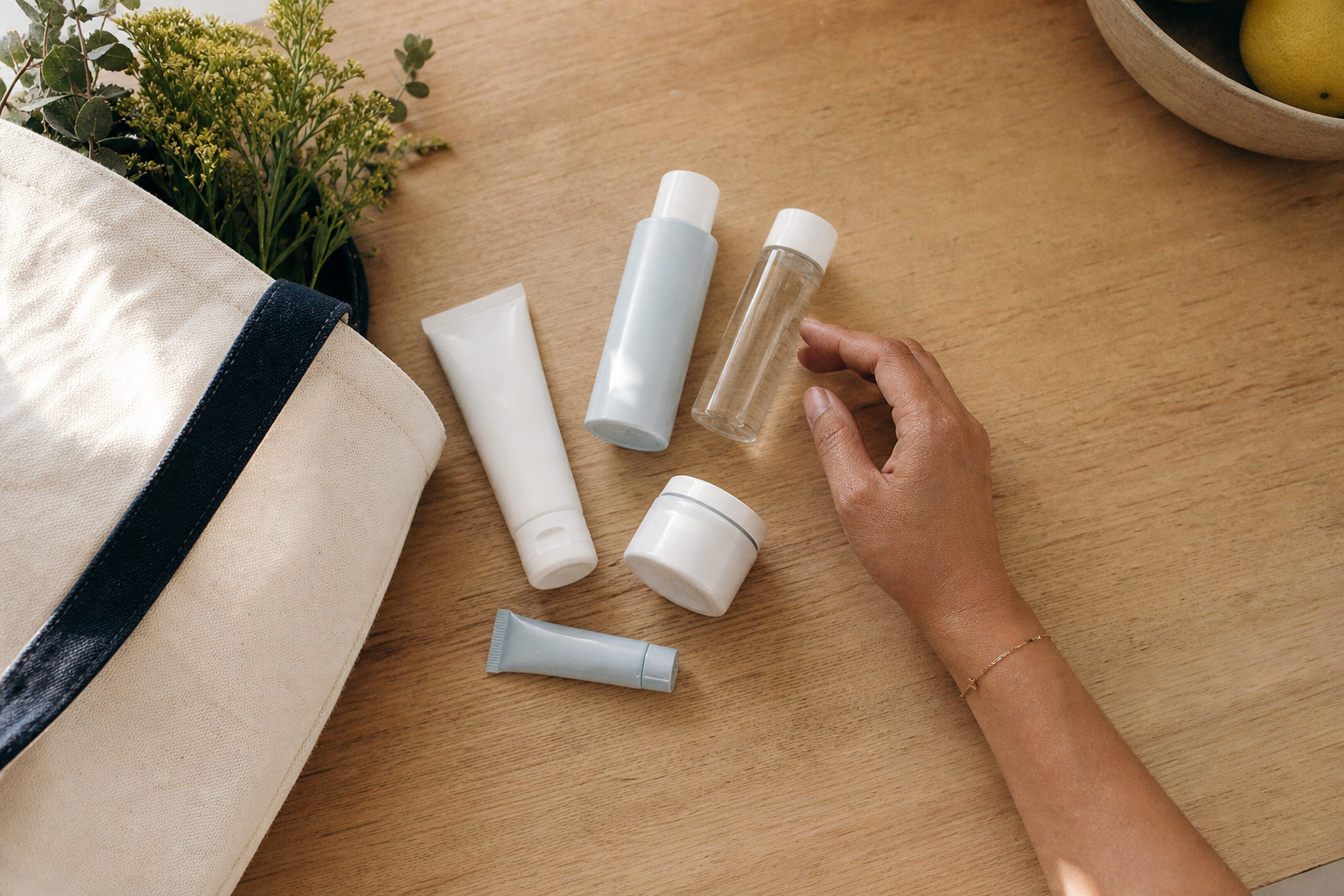
You're standing in the Trader Joe's aisle between the frozen dumplings and the Everything But The Bagel seasoning, and there's a wall of skincare tubes you've walked past a hundred times. Most of us assume grocery-store skincare is filler, impulse-buy territory. The New York Times recently tested the entire Trader Joe's skincare lineup, and the results surprised even the testers. Some of these products, priced under ten dollars, genuinely hold up.
This matters because affordability in skincare shouldn't mean settling. If a five-dollar face wash does what a thirty-dollar one does, that's useful information. What actually delivered, what to skip, and how to think about grocery-store skincare when you're building a routine that works.
The Trader Joe's Skincare Lineup: What You're Actually Looking At
Trader Joe's skincare selection is small, maybe a dozen products depending on your store. You'll find cleansers, moisturizers, a few serums, some body care. The packaging is minimal, the ingredient lists are shorter than most drugstore equivalents, and the price tags sit between three and ten dollars.
The Times testing focused on efficacy, ingredient quality, and whether these products do what they claim. No one expected luxury performance. The question was whether they're functional, gentle, and worth the shelf space in your routine.
What became clear: a few of these products punch well above their price point. Others are fine but unremarkable. And a couple are worth skipping entirely, not because they're harmful, but because better options exist at the same price.
The Standouts: What Actually Works
The Nourish Oil-Free Antioxidant Facial Moisturizer came out on top. It's a lightweight gel cream with niacinamide and red algae extract, absorbs fast, layers well under SPF, and doesn't pill. For oily or combination skin in humid climates, this is the kind of product you buy six of when you find it. The Times testers noted it performed comparably to mid-range moisturizers that cost four times as much.
The Spa Face Wash with Tea Tree Oil also delivered. Tea tree oil can be irritating in high concentrations, but this formulation is balanced. It cleans thoroughly without stripping, works well for skin prone to congestion, and rinses completely. If you're someone who breaks out along the jawline or forehead and needs a cleanser that doesn't leave residue, this one's worth trying.
The Enrich Moisturizing Face Lotion surprised testers. It's heavier than the oil-free version, suited for dry skin or winter months when indoor heating pulls moisture out of everything. The texture is rich but not greasy, and it contains squalane, which helps reinforce the skin barrier. For under six dollars, that's a solid pick.
One body product made the list: the Coconut Body Butter. It's thick, it smells like actual coconut rather than synthetic fragrance, and it absorbs slower than a lotion but faster than most butters. If your legs are dry after winter showers, this works.
What to Skip (And Why)
The Blueberry Açai Facial Scrub tested poorly. Physical scrubs can work if the particles are fine and the base is gentle, but this one's too abrasive for most faces. Testers noted redness after use, and even those with resilient skin felt it was rougher than necessary. Chemical exfoliants, AHAs and BHAs, do the job more evenly and with less risk of micro-tearing. If you're set on a scrub, look elsewhere.
The Rose Water Facial Toner isn't bad, but it's not doing much. Rose water feels nice, smells pleasant, and can provide a momentary hit of hydration. It won't harm your skin. It also won't change anything. If you like the ritual of toner, fine. If you're looking for results, skip it and put the money toward a product with actives.
The Hyaluronic Moisture Boost Serum underperformed. Hyaluronic acid is a solid ingredient when formulated correctly, but this version felt sticky, didn't layer well, and didn't deliver the plumping effect you'd expect. Plenty of drugstore serums do hyaluronic acid better for the same price or less.
How to Think About Grocery Store Skincare
Grocery-store skincare sits in a strange category. It's more accessible than Sephora, less clinical than a dermatologist's office, and cheaper than most drugstore brands. That doesn't make it automatically good or bad. What matters is whether the product does what you need.
Some things to consider:
- Ingredient concentration matters more than ingredient presence. A product can list niacinamide or hyaluronic acid on the label, but if it's near the end of the ingredient list, the concentration is too low to do much. Trader Joe's products tend to keep their formulations simple, which sometimes works in their favor and sometimes leaves them underpowered.
- Texture and finish affect consistency. If a moisturizer pills under sunscreen or a cleanser leaves a film, you won't use it regularly. The best products from Trader Joe's are the ones that fit easily into existing routines.
- Affordability is only useful if the product works. A three-dollar face wash that irritates your skin costs more in the long run than a twelve-dollar one that doesn't.
If you're building a routine from scratch, grocery-store options can fill gaps while you figure out what your skin actually needs. If you already have a routine that works, these products are worth testing when you're curious or when you need a backup.
What This Means for Your Routine
You don't need to overhaul your bathroom cabinet because the Times tested Trader Joe's skincare. What this testing does is confirm that affordability and efficacy can overlap, and that you don't need to spend thirty dollars on every step.
If you're dealing with oily skin and need a lightweight moisturizer, try the Nourish Oil-Free version. If your cleanser is fine but overpriced, the Tea Tree Face Wash is worth a swap. If winter dryness is hitting hard and your current moisturizer isn't cutting it, the Enrich lotion is a low-risk test.
Track what works in your routine with Roona, so you can see patterns over time. A product that feels great in July might not work in January, and a five-dollar moisturizer that keeps your skin comfortable all winter is a better choice than a fifty-dollar one that doesn't.
The point isn't to fetishize affordability or dismiss higher-end products. The point is to pay attention to what your skin responds to, regardless of where you bought it.
The Bigger Picture: Affordable Doesn't Mean Compromised
The conversation around skincare pricing is exhausting. Luxury brands claim their formulations justify the cost. Affordable brands claim they've cracked the code. Most of the time, the truth sits somewhere in the middle, and the product that works for you might cost five dollars or fifty.
What the Trader Joe's testing confirms is that some grocery-store products are genuinely well-formulated. They won't replace a prescription retinoid or a targeted treatment serum, but they can handle the everyday work of cleansing, moisturizing, and maintaining your skin barrier.
If you're near a Trader Joe's and curious, pick up the oil-free moisturizer or the tea tree cleanser. Test them. If they work, great. If they don't, you're out less than ten dollars and you've learned something about what your skin needs.
Skincare doesn't have to be complicated or expensive to be effective. Sometimes the best routine is the one you'll actually follow, and sometimes that routine includes a five-dollar moisturizer from the grocery store.
Trend source: The New York Times (US)
Keep reading
-
What's Actually Worth It in the Medicube Range?
An honest look at Medicube's viral lineup: which products earn a place in your routine, which are optional, and how to test them without wasting money. 27 July 2026 -

Barrier-First Routines for Tropical Climates: Hot, Humid Care
Barrier repair works differently in heat and humidity. Here's how to protect your skin when sweat, sun, and moisture are part of every day. 26 July 2026 -

Watsons Beautopia 2026: What the Hype Says About Malaysian Beauty
Watsons Beautopia 2026 is drawing crowds across Malaysia. Here's what the buzz tells us about ingredients, formats and routines worth watching this year. 25 July 2026