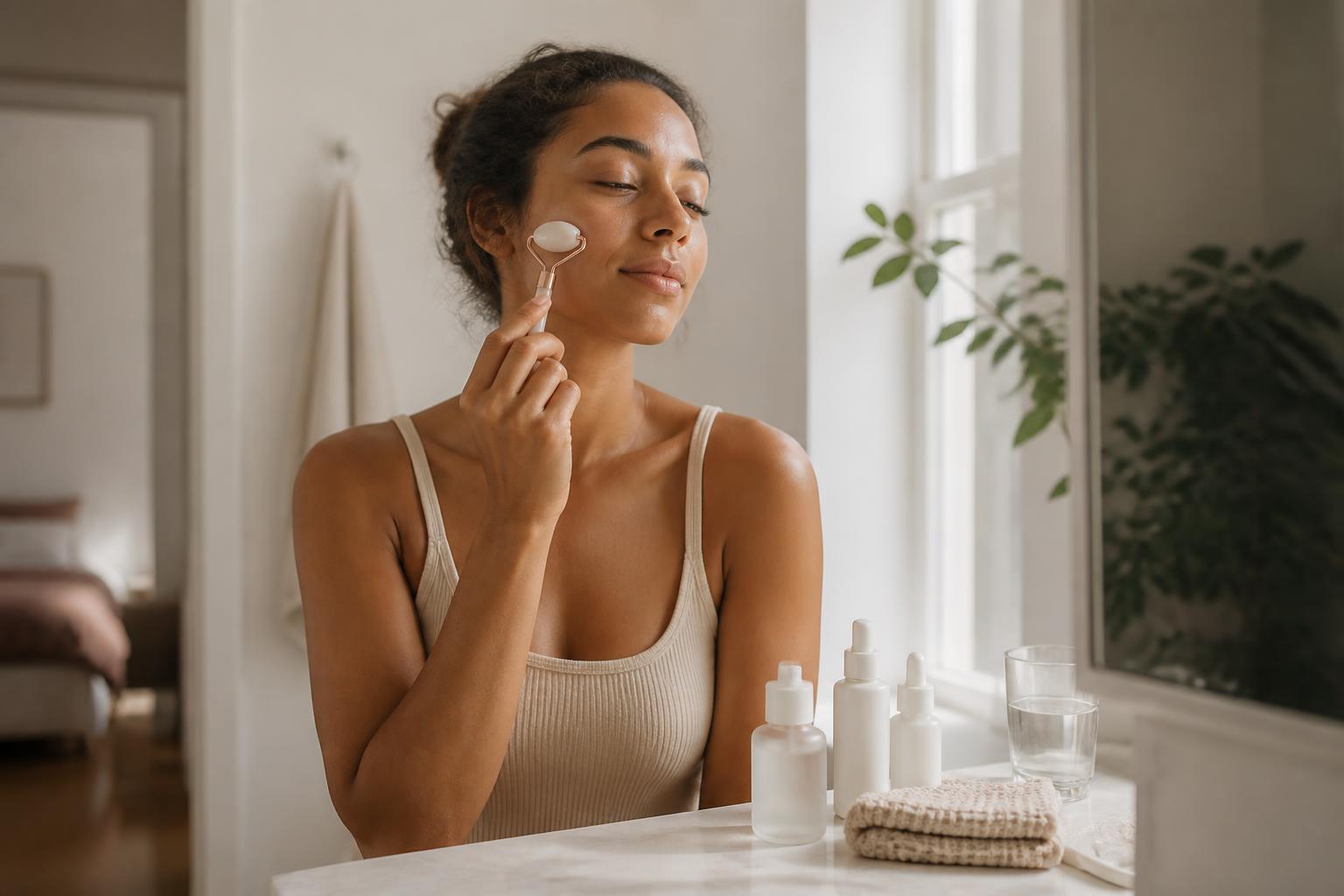
You saw the video at 11pm: someone rolling a frozen metal wand over their cheekbones, captioned something about waking up depuffed and glassy. By morning you'd already checked whether the drugstore near you carried one. That impulse is fair. Summer skin genuinely behaves differently, and when your face feels hot, tight, greasy and blotchy all at once, a cheap trick with a satisfying visual is an easy yes.
Most viral summer hacks fall into three buckets: things with real logic behind them, things that are harmless but oversold, and things that quietly work against your skin barrier. Here's how this year's crop sorts out.
Ice rollers and cold tools: real, but temporary
Cold constricts blood vessels. That's why an ice roller over puffy under-eyes in the morning feels like it did something, because it did: fluid moves, redness calms, and skin looks tighter for a while. If you wake up swollen after a salty dinner or a short night, five minutes with a chilled roller is a pleasant, low-risk way to start the day.
What cold does not do is shrink pores permanently, reduce oil production long term, or replace treatment for persistent redness. The effect fades as your skin returns to normal temperature, usually within the hour.
A few practical notes:
- Keep the roller in the fridge rather than the freezer if the freezer version feels painfully cold on your face.
- Wash the head after every use. It touches your skin, then goes back into a cold, damp space.
- Skip prolonged icing if you have rosacea-prone skin that flushes hard on rewarming, since the rebound can be uncomfortable.
- Use it before makeup, not after, unless you enjoy reapplying everything.
Fridge serums: pleasant, mostly not necessary
The skincare fridge is having another moment, and there is one genuinely good reason to use one. Cold products feel better in July, and a serum that feels good is a serum you actually reach for. Consistency matters more than almost anything else in a routine, so if chilling your vitamin C makes the evening step feel less like a chore, that's a real win.
The claim that gets shakier is stability. Some ingredients, vitamin C among them, are known to be finicky about heat and light, so keeping them out of a steamy bathroom is sensible. That is not the same as needing a dedicated appliance. A drawer in a cool bedroom does most of the work.
Two things to avoid. Oil-based products and thick balms can turn grainy or stiff when cold, which makes them harder to spread and more likely to drag on your skin. And anything with a live-culture or specialty formulation should follow whatever the label says, not what a video says.
Rice water toners and DIY kitchen actives
Rice water is the current favorite in the DIY lane, usually pitched as a brightening toner. Rice does contain starches and amino acids, and rinsing your face with a mild, slightly cloudy liquid will not typically hurt you. But a jar of homemade rice water sitting on your counter for a week is a bacterial culture with no preservative system, and putting that on your face is a genuine risk, especially if you have any broken skin from shaving or picking.
The wider problem with kitchen actives is dosage. Lemon juice is strongly acidic and unpredictable on skin. Baking soda pushes skin pH in the wrong direction. Undiluted apple cider vinegar has caused real chemical burns. Formulated products exist partly to solve this: a niacinamide serum from a mid-range brand gives you a known percentage at a known pH, and that is the whole point of buying it.
If you want the effect people are chasing with rice water, look at gentle, formulated versions instead:
- Niacinamide for tone evenness and oil balance
- Azelaic acid for post-breakout marks and redness
- Alpha arbutin or tranexamic acid for stubborn dark spots
- A low-percentage lactic acid, once or twice weekly, for texture
Mixing sunscreen into moisturizer: this one is a no
This hack circulates every summer, usually framed as a way to skip a step or make a stiff sunscreen feel wearable. Diluting SPF changes how much product lands on your skin and how evenly it films across the surface, and the tested protection factor no longer applies. Same story with mixing sunscreen into foundation, or relying on the SPF in your makeup as your only defense.
If your sunscreen is the reason you're improvising, the fix is a different sunscreen. American shelves have gotten much better here. There are fluid, watery textures, tinted mineral versions that don't leave a gray cast, and gel formulas built for oily skin that sit fine under makeup. Sephora and Ulta both let you return an opened product you dislike, which makes trialing two or three genuinely low-stakes.
For reapplication over the course of a beach day or a long afternoon outside, powder and stick formats are easier to actually use than trying to layer lotion over makeup. Imperfect reapplication beats none.
Slugging in August, and other winter habits out of season
Slugging, sealing your face with an occlusive like petrolatum overnight, earned its reputation in dry winter air. In humid summer conditions, with more sweat and more sebum, a heavy occlusive over your whole face can trap that mix against your skin and trigger congestion around the chin, jaw and hairline. Some people are fine. Many are not.
The seasonal adjustment most people actually need is simpler. Swap the rich winter cream for a lighter gel or lotion, keep your cleanser gentle rather than stripping, and hold onto your treatment steps instead of dropping them because your skin feels oily. Oily is not the same as hydrated. If you have specific dry patches, around the nose or on your cheeks, spot-treat those with something occlusive rather than coating everything.
This is where writing things down beats memory. Summer changes several variables at once: heat, humidity, pool chlorine, more sun exposure, more sweat, sometimes a new sunscreen. When your skin shifts, it's hard to know which change did it. If you track your routine with Roona, you can see what you actually introduced and when, which turns guesswork into something you can act on.
How to test a hack without wrecking your routine
Most viral hacks are cheap enough to try, which is exactly why people try five at once and then can't tell what happened. A slower approach costs nothing extra.
- Add one new thing at a time and give it two weeks before judging.
- Keep your core steps stable while you test: cleanser, moisturizer, sunscreen.
- Patch test anything with an active or an unfamiliar formula on your jaw or inner arm first.
- Note the date you started, and note how your skin looks around day three, day seven and day fourteen.
- If something stings, burns or leaves your skin red and tight, stop. Discomfort is information, not a sign it's working.
The hacks with staying power tend to be the boring ones. Cold water on a hot face feels good. Lighter textures in humid weather make sense. A sunscreen you like is a sunscreen you wear. Everything else is optional, and treating it as optional is what keeps your routine calm enough to stick with in the first place.
If you want to keep a quiet record of what you're trying this summer and how your skin responds, Roona is there when you feel like it. No streaks to protect, no pressure.
Trend source: femina.in (US)
Keep reading
-
The viral Brazilian Break skincare bag, edited for real travel
Build a lighter Brazilian Break skincare bag with practical travel sizes, heat-friendly ingredients, SPF, and a routine you can actually follow. 30 August 2026 -
The Skincare Myths That Won't Die (and What Replaces Them)
Steam doesn't open pores and tingling isn't progress. A calm look at the skincare myths that keep circulating, and the less dramatic advice that works better. 4 August 2026 -

Viral TikTok Beauty Buys: What Holds Up in Singapore
Humidity, haze days and full-blast aircon change how products behave. A calm look at which viral TikTok beauty buys actually suit Singapore skin. 4 August 2026