You have probably seen the clip, or one of the hundreds of versions of it. Tate McRae, cleanser in hand, delivering her lines about her skin with the smooth cadence of someone who has done a lot of press. Then the duets started: people in bathrooms holding up shampoo bottles, ketchup, a stapler, mimicking the exact rhythm and eyebrow lift. The parodies spread fast enough that they became the ad's second life, and its bigger one.
What is interesting is that nobody was really attacking the product. Neutrogena's cleansers are drugstore staples that a lot of people genuinely use and like. The joke was about the register the ad was performed in: a very specific, very polished sincerity that landed as uncanny to an audience fluent in reading tone.
Why polish reads as fake to a TikTok-native audience
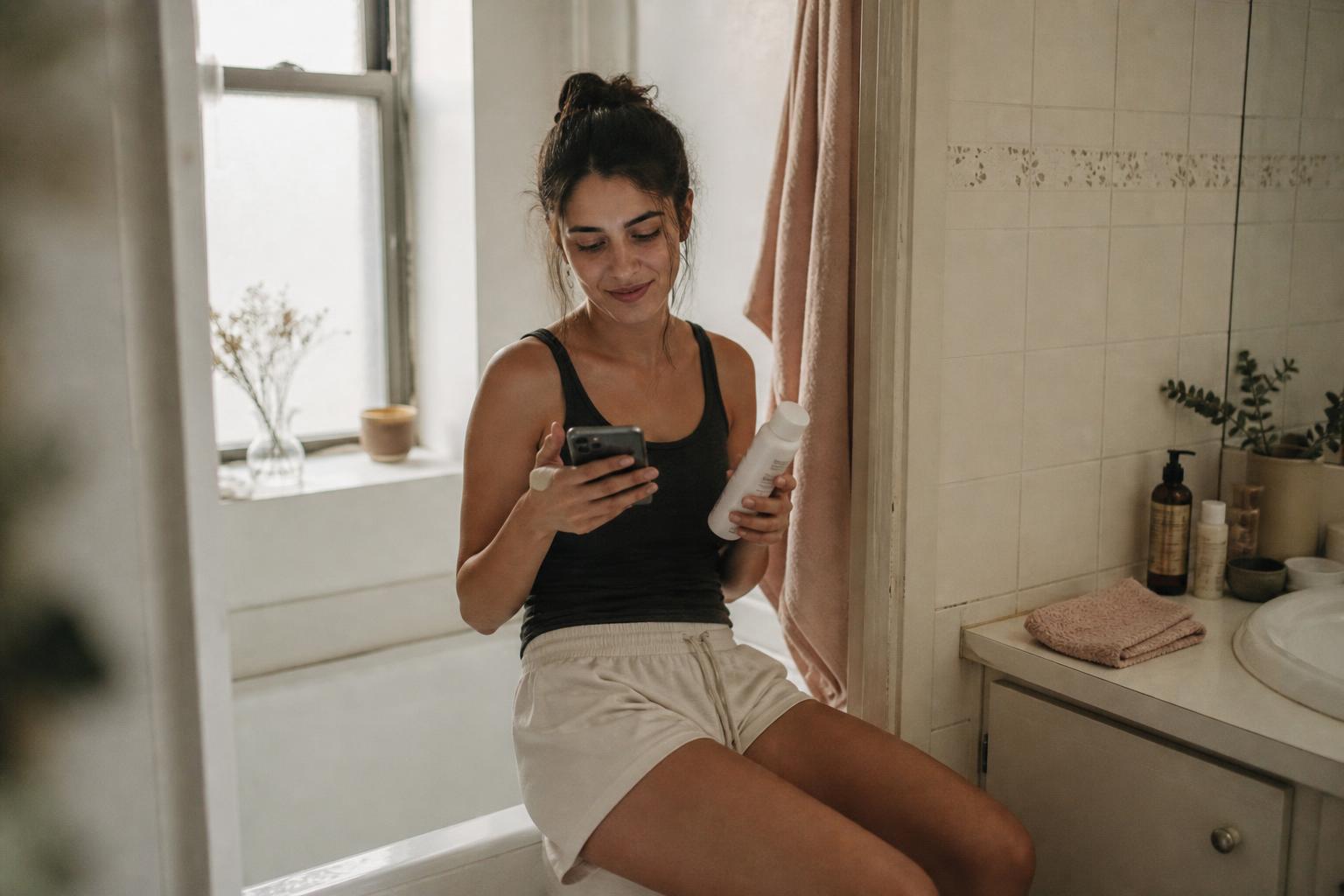
Most skincare content people watch is filmed vertically, in a bathroom, with someone's overhead light making everyone look slightly green. The unspoken rules are loose: you can say a product broke you out, you can film your third attempt at applying sunscreen, you can trail off mid-sentence. That texture became the format's proof of honesty.
A traditional ad runs on the opposite instincts. Lighting is controlled. Lines are written, then said again until the delivery is clean. Nothing is accidental. When that lands in a feed between two unedited videos, the contrast does the work. It isn't that viewers think the celebrity is lying about her cleanser. It's that the seams show, and showing seams is the one thing the format punishes.
So the parody isn't hostility. It's recognition. People are pointing at a familiar shape and saying: I know exactly what this is.
The authenticity problem beauty marketing built for itself
Beauty advertising spent years training people to look for evidence of realness. Unretouched campaigns. Founders talking to camera about their own skin. Dermatologists explaining ingredients on YouTube. Ulta and Sephora shelves filled with brands whose whole pitch is that they are not doing the old thing.
That training worked, and now it cuts in every direction. Once you have taught a shopper to notice the difference between staged and unstaged, you cannot un-teach it for your own campaign. A viewer who can spot a scripted testimonial can also spot a scripted candid moment, and the second one often reads worse.
There's a practical consequence for anyone actually trying to figure out what to put on their face. If sincerity is the thing being performed, sincerity stops being useful information. The warmth in someone's voice tells you nothing about whether the formula suits you. That's not cynicism, it's just where the signal has moved.
What actually carries information in a skincare ad
Strip out tone and you are left with a small amount of genuinely useful content. It's worth knowing where to look.
- The ingredient list, in order. The first five or six ingredients make up most of the formula. If a hero ingredient sits below the fragrance, it is there for the label.
- The product category and what it is asked to do. A gel cleanser removes surface oil and sunscreen. It is not going to resurface anything, no matter how the voiceover frames it.
- The claim's actual wording. "Visibly smoother" is a cosmetic claim about appearance. "Helps reduce the look of dark spots" is doing careful work with the word "look".
- Whether a percentage is given for actives. Ten percent niacinamide behaves differently from a trace amount, and brands that use a meaningful concentration usually say so.
- The format for your climate and season. A heavy occlusive balm makes sense in a Midwest February. In a Houston August it mostly makes sense at night, if at all.
None of that requires you to decide whether the celebrity means it. You can enjoy the ad, laugh at the parodies, and still read the back of the bottle.
Celebrity skin is not a data point
The uncomfortable part of any celebrity skincare ad is the implied argument: this is what the product does, and here is the face to prove it. Even when nobody says that out loud, the framing carries it.
What you are looking at in a campaign is a combination of genetics, professional lighting, a makeup artist, retouching that ranges from light to substantial, and often years of access to treatments that never appear in the ad. The cleanser may well be part of that person's routine. It is not what you are seeing.
This is the same logic that makes comparison-scrolling so draining. Your skin at 11pm under a bathroom vanity is being measured against an image built by a team. That comparison was never fair, and noticing the machinery behind it takes some of the sting out.
How to use trend content without letting it run your routine
The parody wave is fun. Beauty discourse on TikTok is often genuinely informative, especially when chemists and dermatologists jump in to explain why a viral hack is a bad idea. The trouble starts when the pace of the feed sets the pace of your bathroom shelf.
A few habits that keep the two separate:
- Give a new active six to eight weeks before deciding. Cell turnover and irritation cycles do not move at content speed.
- Add one new product at a time. If you start a retinoid and an exfoliating acid the same week, you will not know which one caused the stinging.
- Keep the constants boring: a gentle cleanser, a moisturizer you like the feel of, broad-spectrum SPF 30 or higher every morning. Those three do most of the work.
- Write down what you started and when. Memory is unreliable, especially about something you look at every day.
That last one is why we built Roona the way we did. Logging a product start date and checking back a month later tells you more than any review ever will, because it's about your skin specifically. If you want to be more deliberate about it, you can track how your skin responds over time with Roona and let the pattern show up on its own.
The ad worked, which is the strange part
Every parody carried the original's rhythm, which means every parody carried the brand. That is a marketing outcome most campaigns would take. It also means the lesson brands draw from this may not be "be more real" so much as "be memeable", which is a different instruction entirely.
For a shopper, that shifts the question. The useful thing to ask is not whether an ad feels honest, because feeling is the part being engineered. Ask what the product is, what's in it, and whether that fits what your skin is doing right now, in the season you're actually in.
You already have good instincts here. Point that same attention at ingredient lists and you'll spend less money on things that were never going to suit you.
If you feel like getting a clearer read on what's actually working in your own routine, Roona is here whenever you want it. No urgency, no streak to protect.
Trend source: The New York Times (US)
Keep reading
-

Sephora's Tween Skincare Lawsuit: What Parents Need to Know
A clear guide for Singapore parents on the Sephora youth skincare lawsuit, ingredient labels, age-appropriate routines, and safer shopping decisions. 8 October 2026 -
The aging myths dermatologists are tired of repeating
Expensive means effective. You need a separate eye cream. Anti-aging starts at 30. A look at the beliefs quietly wasting your money and your skin's time. 25 August 2026 -
Mercury in Skincare: What to Know and How to Shop Safely
Mercury has turned up in skin creams sold in the United States. What it does, which product types get flagged, and how to check labels without panic. 19 August 2026