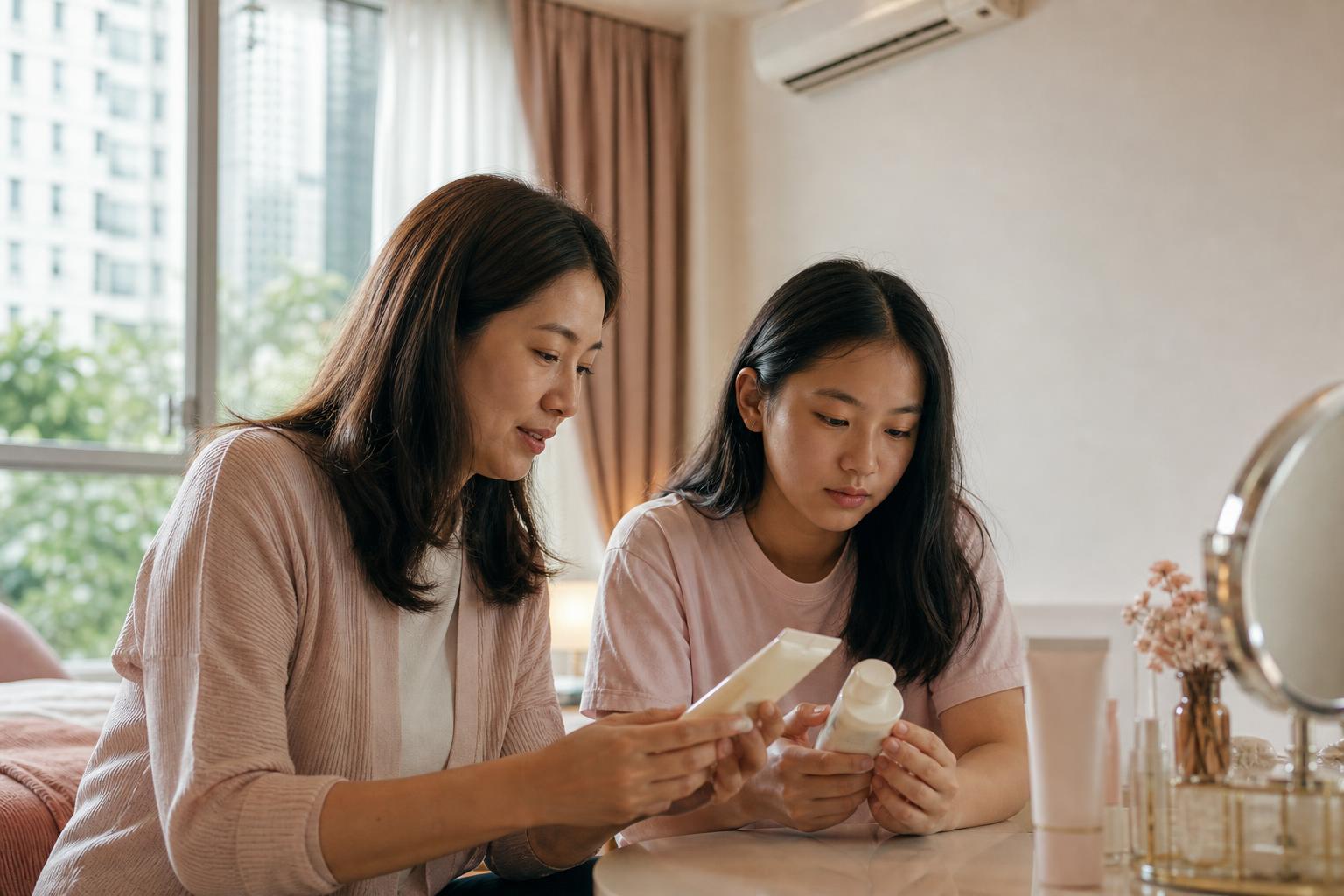
A child asks for a peptide serum at Sephora, then points to a retinol product in the next aisle. For parents in Singapore, the difficult part is rarely finding skincare. It is working out which products have a useful place in a young person's routine and which ones arrived through clever youth-focused marketing.
Reports of legal action against Sephora have brought that question into sharper focus. The lawsuit challenges how youth-oriented skincare is marketed and refers to more than 1,600 products. A lawsuit contains allegations, not final findings, so parents should read the news carefully. The case does, however, raise practical questions about age, ingredients, advertising and adult responsibility.
What the Sephora lawsuit is about
Public reporting describes a complaint that challenges Sephora's marketing of skincare to tweens and teens. The legal action reportedly points to the large number of products that children may encounter through store displays, online recommendations and social media-led beauty trends.
The central question is not whether every product on a beauty shelf is unsafe for every young person. Products differ by formula, concentration, intended use and directions. A gentle cleanser and a leave-on exfoliating acid belong to very different parts of a routine, even if both sit in the skincare section.
The lawsuit also does not establish that all of the products named are harmful. Courts still need to assess the claims and evidence. Parents can take the concern seriously without treating every trending serum as dangerous.
That distinction matters in Singapore, where a young shopper can move between Sephora, Watsons and Guardian, then see the same product recommended on TikTok or Instagram. A colourful package can make an adult formula look like a reasonable first step for a child. Marketing can affect a purchase, but it cannot replace an age-appropriate routine.
Why age matters when choosing skincare
Children and younger teens often need fewer products than adult skincare routines suggest. A basic routine usually has a simple purpose: remove sweat, sunscreen and dirt; apply a plain moisturiser when the skin feels dry; and use sunscreen during daytime outdoor exposure.
A young person may also have a specific concern, such as spots, oiliness or irritation after trying a new product. The right response depends on the concern and the product involved. Adding several active ingredients at once makes it harder to identify what caused redness, stinging or peeling.
Parents should pay close attention to products containing:
- Retinoids, including retinol and retinal
- Exfoliating acids, such as glycolic acid, lactic acid and salicylic acid
- Benzoyl peroxide, often found in products for blemish-prone skin
- Strongly fragranced formulas or essential oils, especially if a child reports stinging
- Multiple active ingredients combined in one leave-on product
This list does not mean that every ingredient is unsuitable for every teen. It means the product deserves a clear reason, careful use and attention to its directions. A child who wants a glass-skin routine does not need every ingredient that appears in a popular adult routine.
How to read a skincare label with your child
A label gives parents a practical starting point. Begin with the product type. A rinse-off cleanser has less contact time with the skin than a leave-on serum. A moisturiser may contain niacinamide or ceramides for a straightforward routine, while an exfoliating toner can add another active step that a young person may not need.
Next, check the ingredient list and directions. Look for the active ingredients named on the front of the package, then scan for fragrance if your child often reacts to fragranced products. Check whether the product says to use it once a day, a few times a week or only on a specific area. More frequent use does not make a product work better.
A useful label check includes:
- What is this product designed to do?
- Is it rinse-off or leave-on?
- Which active ingredients does it contain?
- Does the label give an age direction or a warning?
- Will it replace an existing step, or add another one?
- Can your child explain why they want it?
The last question helps separate a skin need from a social media recommendation. If a teen wants a niacinamide serum because their cleanser leaves their skin tight, changing the cleanser or adding a basic moisturiser may make more sense than adding another serum.
A practical routine for Singapore's climate
Singapore's humidity can make heavy creams and layered products feel uncomfortable, while indoor air-conditioning can leave the skin feeling dry. That contrast often encourages people to keep changing products. A shorter routine makes it easier to see what the skin tolerates.
A simple morning routine can include:
- A gentle cleanse, or a water rinse if the face is not oily after sleep
- A plain moisturiser if the skin feels tight or dry
- Broad-spectrum sunscreen for outdoor time, applied according to the product directions
At night, use a gentle cleanser to remove sunscreen and makeup, then apply moisturiser if needed. A teen with a specific concern can discuss an additional product with a parent and, when appropriate, a qualified healthcare professional.
Sunscreen deserves a practical note. Choose a product labelled for broad-spectrum protection and use it when spending time outdoors. Reapply according to the label, especially after sweating or swimming. Singapore's heat and daily outdoor travel make this a more useful focus than collecting several brightening serums.
What parents should do with active ingredients
Active ingredients need a reason and a plan. Do not introduce a retinoid, exfoliating acid and acne-focused treatment in the same week. Start with one new product, follow its label and observe the skin before adding anything else.
Patch testing can help identify a reaction, but it cannot guarantee that a product will suit the face. Follow the brand's instructions for testing. Stop using a product if it causes significant burning, swelling or a worsening reaction, and seek appropriate medical advice when symptoms are severe, persistent or worrying.
Keep products away from the eyes unless the label says they are suitable for that area. Do not share jars, spatulas or eye products. Store skincare as directed, particularly in Singapore's heat and humidity, and discard products that change smell, colour or texture.
Parents can also set a useful boundary: one new product at a time. Take a photo of the ingredient list and note the date of first use. Track your routine with Roona to record products, timing and changes in your skin. A simple record can show whether a new serum added value or only added another variable.
How to shop at Sephora, Watsons and Guardian
Store choice matters less than the decision process. In a physical shop, ignore the basket size and start with the routine your child already has. If they own a cleanser, moisturiser and sunscreen, ask what problem the next product should address before buying it.
Online, read the full ingredient list rather than relying on claims such as "clean", "glow" or "skin-loving". These phrases do not tell you how a formula will suit a particular person. Read the directions, warnings and intended use. Keep a screenshot of the product page if the packaging does not show enough information.
For products that make treatment-style claims, check whether the wording stays within cosmetic use. If a product promises to change a skin condition or offers a medical outcome, ask a pharmacist or healthcare professional for guidance rather than treating the marketing claim as proof.
Singapore parents can also ask store staff for the full product information and contact the brand when the label is unclear. A confident sales pitch is not the same as evidence. Your child can learn to compare ingredient lists without feeling judged for enjoying beauty products.
Who decides what is appropriate?
Parents set the boundaries, but children should have a voice in the routine. Invite your child to choose between suitable options, such as two gentle cleansers or two sunscreen textures. This keeps the conversation practical and reduces the appeal of buying a product in secret.
The right standard is not whether a product is popular with adults or appears in a teen's feed. Ask whether the product has a clear purpose, whether the directions suit the user and whether the routine remains easy to follow. A product that creates stinging, peeling or repeated product switching has earned a pause, regardless of its packaging or price.
The Sephora case may take time to resolve, and its allegations should not be treated as a verdict. Parents do not need to wait for a court decision to make sensible choices. Keep the routine short, read the label, introduce active ingredients carefully and treat marketing as a prompt to investigate rather than a reason to buy.
If you want a calmer way to notice patterns in products and routines, you can use Roona to keep a simple skincare log. Bring your notes to the next product decision, and let the routine grow only when your child's skin and needs give you a clear reason.
Trend source: PPC Land (SG)
Keep reading
-
Sephora Afterpay Sale Singapore: What to Buy and Skip
Make smarter Sephora Afterpay Sale purchases in Singapore with a practical guide to useful skincare, makeup and haircare deals worth skipping. 27 August 2026 -
After 40, This Viral Skincare Routine May Overwork Your Skin
Why the viral multi-step skincare routine can irritate skin after 40, plus a gentler Singapore routine with acids, retinoids and SPF. 5 September 2026 -

From Viral Skincare to Evidence-Based Dermocosmetics
Skincare in Mexico is shifting from TikTok trends to ingredient-backed dermocosmetics. Here is what to look for, and how to build a routine that lasts. 20 August 2026