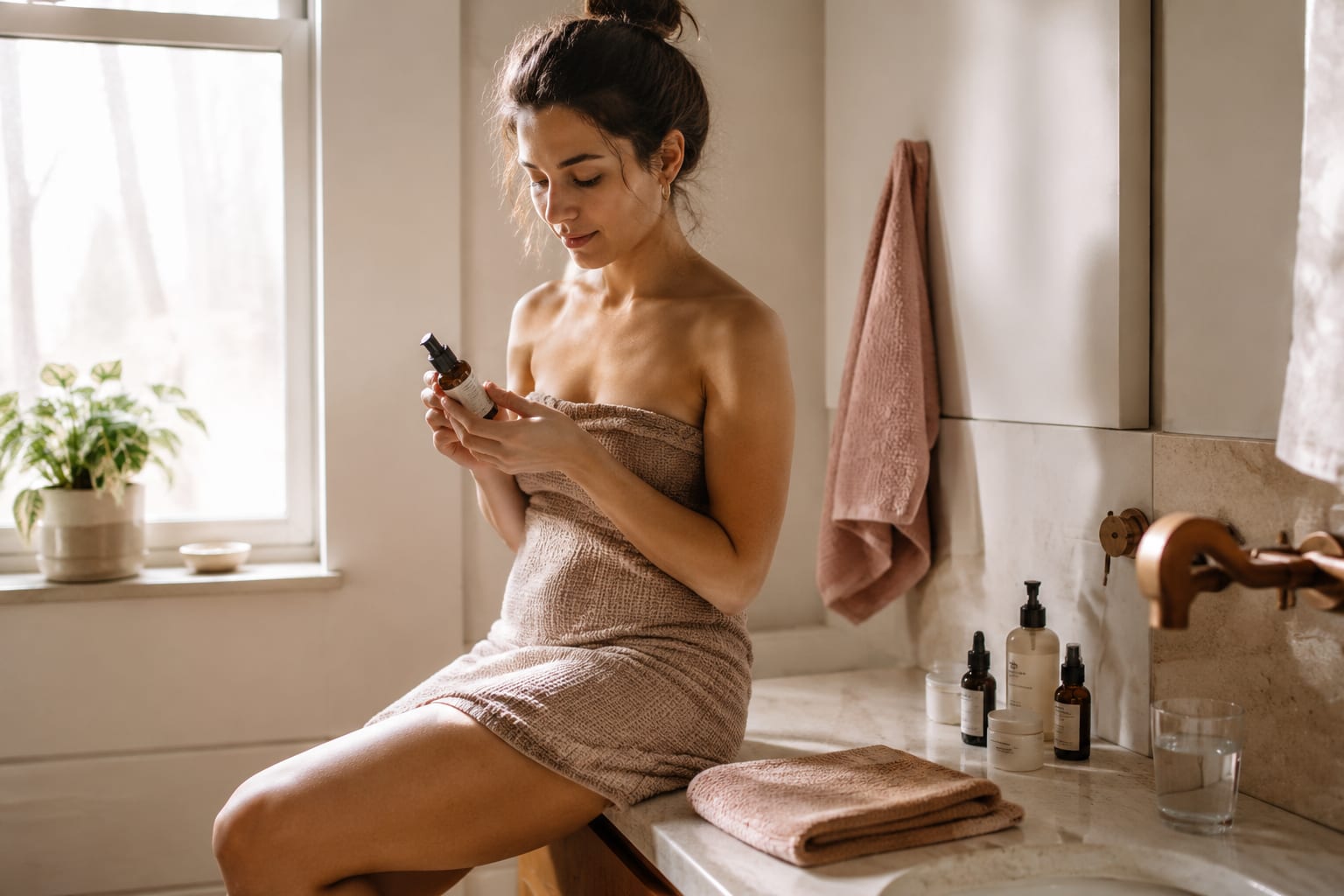
You're in the Ulta aisle with a serum in each hand. One says clinically proven, the other says dermatologist tested. Both cost about the same. Neither tells you what was tested, on how many people, or against what. So you pick the one with nicer packaging, or the one a creator you like mentioned last week, and you go home slightly unsure whether you just bought the same formula twice.
That gap between what a label says and what it means is where the idea of beauty literacy lives. It borrows its logic from media literacy: instead of asking whether a claim sounds true, you ask who made it, what it's actually asserting, and what would count as evidence. Several people building brands and educational platforms in the United States have started framing consumer education this way, treating decoding skills as the product rather than another bottle.
What beauty literacy actually means
Media literacy taught a generation to check a byline, notice the difference between reporting and opinion, and spot when a headline overstates the study underneath it. Beauty literacy applies the same habits to a moisturizer.
In practice it means separating four things that usually arrive fused together: the ingredient, the formula, the marketing claim, and the recommendation. Niacinamide has a real research base behind it for barrier support and tone. A specific serum containing niacinamide may or may not use it at a useful concentration, in a base your skin tolerates. The box may say brightening, which is a marketing word with no fixed definition. And the person who told you to buy it may have been paid to. All four can be true at once, and they need to be judged separately.
The claims that sound like science but aren't
Some terms on a US skincare label carry legal weight. SPF and broad spectrum do, because sunscreen is regulated as an over-the-counter drug, which is why sunscreen bottles have a Drug Facts panel and a moisturizer doesn't. Active ingredient means something specific in that context.
Other terms carry none. Clean, hypoallergenic, non-toxic and gentle have no agreed definition, and a brand can use them at will. Dermatologist tested tells you a dermatologist was involved somewhere in the process. It doesn't tell you what the test was or what it found. Clinically proven is often built on a small study where participants rated their own skin, which is useful for comfort and texture and much weaker for anything structural.
The pattern worth noticing: the more scientific a phrase sounds while staying unmeasurable, the more likely it's doing marketing work. Look for numbers you can check, a named percentage, a study design, a comparison. When the claim is precise, the brand is usually willing to be pinned down.
Reading an ingredient list without a chemistry degree
Every cosmetic sold in the United States has to declare its ingredients, and there's a convention that makes that list readable. Ingredients present above one percent are listed in descending order of concentration. Below one percent they can appear in any order. So the first five or six entries tell you what the product mostly is, and everything after the fragrance or preservative is usually a small addition.
That single rule changes how a lot of packaging reads. A vitamin C serum with ascorbic acid sitting near the bottom of the list, below phenoxyethanol, is not really a vitamin C serum. A ceramide cream with ceramides near the top is doing what it says.
A few things worth locating on any label:
- The first five ingredients, which are the bulk of the formula
- Whichever hero ingredient the front of the bottle advertised, and where it actually sits
- Fragrance or parfum, the most common trigger for reactive skin
- Denatured alcohol high in the list, which can feel drying in cold months
- Essential oils, which are fragrance regardless of how natural the branding is
None of these are disqualifying. Fragrance is fine for plenty of people. The point is that you know what you're agreeing to.
How to watch beauty content without absorbing it whole
TikTok and Reels are genuinely good at spreading structure. Skin cycling caught on because alternating exfoliation, retinoid and recovery nights is a sane framework for people who were using everything every night. The format is worse at nuance, because a fifteen second clip has no room for the caveat.
Three questions handle most of it. Who is this person, and what do they actually know? What are they selling, whether that's a product, a code, or their own authority? And is this a claim about their skin or a claim about skin in general?
A board-certified dermatologist explaining how tretinoin works is closer to reporting. The same dermatologist launching a line is still worth listening to, with the commercial interest in view. A creator with clear skin telling you a product transformed their face is an anecdote, and their skin type, climate, hormones and budget are all invisible variables. Anecdotes are useful for finding candidates to try. They aren't evidence.
Testing claims on your own skin
Beauty literacy ends at your bathroom counter, because the only study that matters to you has one participant. That's the part most people skip, and it's the part that turns information into something usable.
Introduce one new product at a time and give it a real window. Hydration and texture changes show up in days. Anything involving tone or acne with a retinoid or an acid takes a couple of months, which is longer than most people's patience and shorter than most brands imply. Patch test on the jawline or inner forearm for a few days before it goes near your whole face, especially with anything acidic or with high-strength vitamin C.
Keep a record, because memory is unreliable about skin. You will not remember whether the stinging started before or after you added the exfoliating toner, or that your skin got tight around the same week the heating came on. Writing down what you used and how your skin felt turns three months of guessing into a pattern you can read. If you'd rather not run a spreadsheet, you can track your routine with Roona and let the log build itself.
Seasonal context belongs in that record too. Dry indoor air in a Chicago or Boston winter will change how a gel moisturizer performs, and a humid Houston August will change how much occlusive you can tolerate. A product that failed in February may be right in July.
A working checklist
When you're deciding whether a claim deserves your money:
- Name the claim in plain language, without the marketing word.
- Check whether the key ingredient appears high enough in the list to matter.
- Ask who benefits if you believe it.
- Decide what result you'd accept as proof, and how long you'll give it.
- Log what happens, and compare against your own skin, not the before photo on the box.
None of this requires becoming a formulation expert. It requires a slightly slower hand at checkout, and a willingness to be unimpressed by a phrase that sounds like science.
Skincare gets much calmer once you're evaluating fewer, better-understood things. If you want a place to keep those notes and watch the patterns emerge over a season, Roona is there when you feel like it.
Trend source: WWD (US)
Keep reading
-
The Viral Skincare 'Dangers' You Can Safely Ignore
Not every viral skincare warning deserves your anxiety. Here's how to tell which ingredient fears are grounded in evidence and which are just noise. 10 August 2026 -
Viral TikTok Beauty Buys: What Holds Up in Singapore
Humidity, haze days and full-blast aircon change how products behave. A calm look at which viral TikTok beauty buys actually suit Singapore skin. 4 August 2026 -
Glowcations: Why Seoul Is the New Skincare Getaway
Seoul's skincare travel trend blends clinic appointments, K-beauty shopping, and routine planning into a more thoughtful alternative to the spa weekend. 5 September 2026