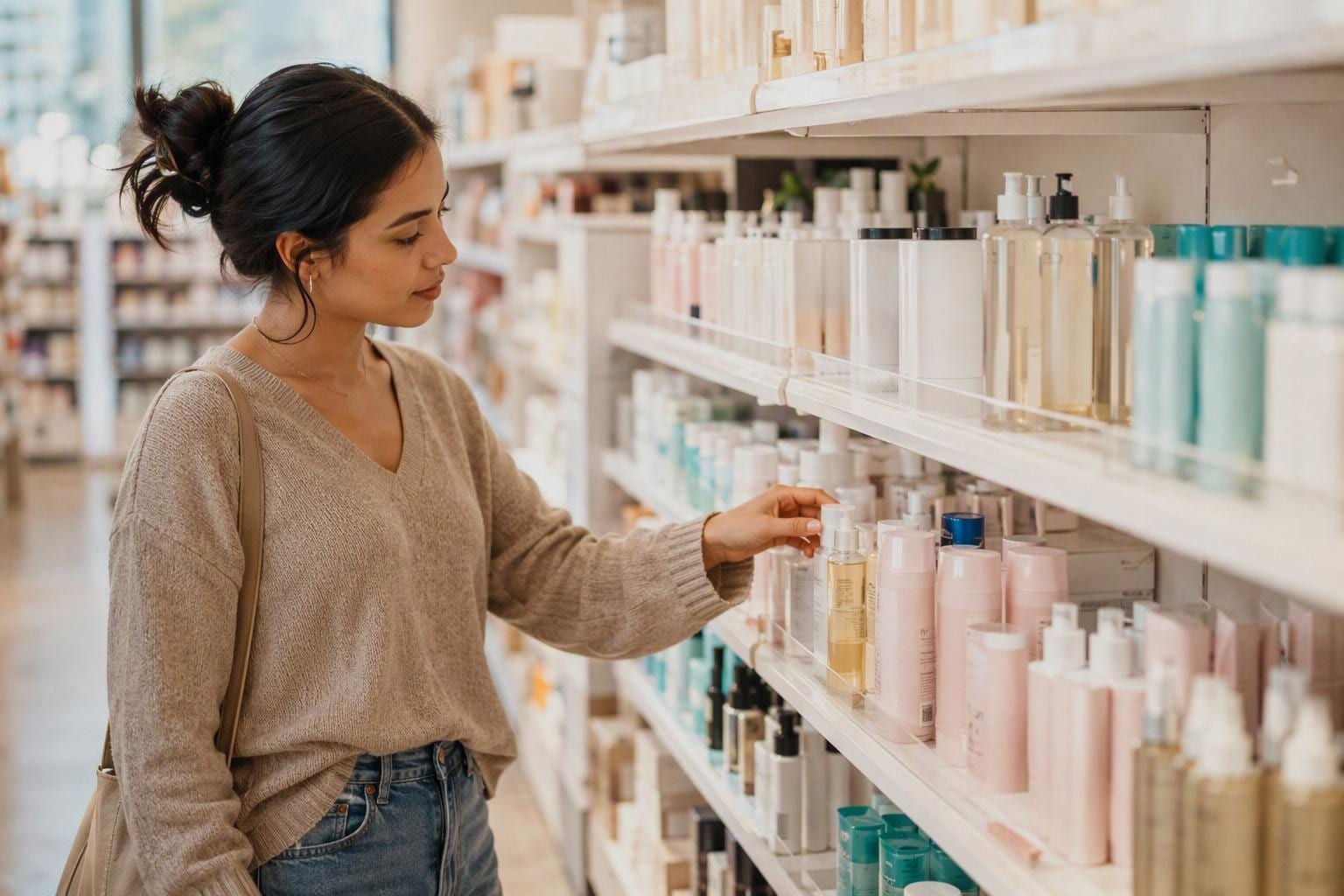
You walk past a drugstore shelf, pick up a bottle of CeraVe moisturizer for twelve dollars, and check out. A week later, the same brand announces a speakeasy-themed pop-up in Manhattan where you need a reservation to try the products you could have grabbed at CVS.
CeraVe's 'Squeakeasy' arrived in New York City this year, complete with themed rooms, photo ops, and appointments that filled up fast. The brand that built its reputation on dermatologist recommendations and pharmacy accessibility suddenly wanted you to experience it in person, surrounded by mood lighting and Instagram moments. It sounds like a mismatch. It also says something about where mass-market skincare is placing its bets right now.
When drugstore brands start acting like luxury ones
CeraVe is not the first affordable brand to build a physical experience. The Ordinary opened a store in New York years ago. Glossier turned retail into a destination before scaling back. But CeraVe occupies a different lane. It never positioned itself as cool or aspirational. It positioned itself as effective, accessible, and recommended by professionals. The ceramide-heavy formulas, the plain packaging, the presence in every Walgreens and Target across the country: those were the brand.
A pop-up changes the signal. When you invest in experiential marketing, you are saying that the product on the shelf is not enough. You need the customer to spend time with the brand, to feel something about it, to take a photo and tag you. That strategy makes sense for a luxury launch with margin to spare. It makes less obvious sense for a brand selling cleansers under fifteen dollars.
But the logic becomes clearer when you consider what CeraVe is competing against now. Not just other drugstore lines, but the entire feed. A shopper scrolling TikTok sees Korean essences, dermatologist-led indie brands, dupes for luxury serums, influencers breaking down ingredient lists. Shelf space alone does not guarantee attention anymore. A pop-up does, at least for the news cycle it generates and the content it seeds.
What experiential marketing actually buys
The Squeakeasy was not designed to sell moisturizer on site. It was designed to be talked about. Every attendee who posted a story or a photo extended the campaign's reach without CeraVe paying for another ad placement. The structure is older than social media, borrowed from liquor and fashion and tech launches, but skincare adopted it late.
Pop-ups give a brand a few specific things:
- Press coverage. Local news, beauty blogs, and industry outlets cover the event because it is concrete and visual. A new product formula is harder to write about than a themed room you can photograph.
- Content seeding. Attendees generate dozens of posts per visit. That content feels more authentic than a paid ad, even when the visit itself required a reservation and the brand curated every detail.
- Perceived scarcity. A limited-time experience in one city makes the brand feel more desirable, even if the product is widely available. Scarcity is a borrowed luxury tactic.
None of this directly improves the product. The ceramides in the moisturizer work the same whether you bought it at a pop-up or a pharmacy. But experiential marketing is about the brand's position in the buyer's mind, and whether that buyer thinks about the brand at all.
The tension between accessible and aspirational
CeraVe's founding premise was accessibility. Dermatologists recommended it because it worked and because patients could afford to use it consistently. The brand did not need to be exciting. It needed to be effective and available.
Experiential marketing pulls in the opposite direction. A pop-up in Manhattan is not accessible to someone in Ohio or Arizona. A reservation system is not inclusive. The language around these events, the aesthetic, the exclusivity, all of it borrows from luxury playbooks. That does not make the strategy wrong, but it does create friction with the brand's original identity.
Some of that friction is deliberate. CeraVe may want to shake the perception that it is boring or clinical, especially as younger buyers treat skincare as self-care and content rather than maintenance. A pop-up reframes the brand as something worth experiencing, not just using.
But the risk is that the brand starts to feel like it is performing for a different audience. The person who has been buying CeraVe for years because it is affordable and works does not need a speakeasy. The person who wants a speakeasy might not need CeraVe, because they already have ten other brands competing for their attention with similar tactics.
Where this leaves the rest of us
If you live nowhere near New York, the Squeakeasy means nothing to you except as a headline. You still buy CeraVe the same way you always did, or you do not buy it at all. The pop-up was never built for you.
That is worth remembering when you see this kind of marketing. The experience is designed to generate attention and content, not to serve every customer. It succeeds if it gets written about and posted about, not if it converts every attendee into a loyal buyer. The actual product, the one you pick up at the drugstore, is still the thing doing the work.
If you are building a routine around affordability and consistency, none of this changes what matters. You still want products that suit your skin, that you can reorder easily, that fit your budget over months and years. A pop-up does not make a cleanser more effective. A themed room does not repair your skin barrier. Tracking what actually works in your routine still matters more than whether a brand threw a launch party.
What it signals about where brands are spending
The Squeakeasy is a symptom, not an outlier. Affordable skincare brands are spending more on experiences, influencer partnerships, and content-ready moments because that is where attention lives now. A dermatologist recommendation still carries weight, but it does not generate the same volume of impressions as a well-executed pop-up.
That shift has consequences. Brands allocate budget somewhere. Money spent on experiential marketing is money not spent on reformulation, packaging sustainability, or lowering prices. None of those things photograph as well as a speakeasy, so they generate less buzz. But they might matter more to the person actually using the product every day.
You can appreciate the cleverness of a pop-up and still ask what it costs. Not just in dollars, but in what the brand chooses not to prioritize. CeraVe is still affordable, still widely available, still recommended by dermatologists. But the brand's energy is going somewhere new.
Building a routine that ignores the noise
Skincare marketing will keep getting louder and more inventive. Brands will keep finding ways to turn a face wash into an event. You do not have to follow them there.
A good routine is built on products that work for your skin, that you can access easily, that you will actually use. It is built on patience, not novelty. It is built on tracking what helps and what does not, over weeks and months, not on what looked good in someone else's Instagram story.
If CeraVe works for you, keep using it. If it does not, try something else. The pop-up does not change the formula. The hype does not change your skin. What changes your skin is what you put on it, consistently, and whether you pay attention to how it responds.
Roona helps you track your routine and notice what actually makes a difference, without the noise of marketing or the pressure of trends. That clarity matters more than any themed experience a brand can build.
Trend source: Newsradio WTAM 1100 (US)
Keep reading
-
When a Skincare Ad Becomes a Meme
Tate McRae's Neutrogena ad turned into a TikTok parody wave. What that says about polish, sincerity, and how to read beauty marketing without cynicism. 14 August 2026 -
What Dermatologists Actually Buy at CVS for Themselves
Derm-approved drugstore lists are everywhere. Here's how to read them, which staples keep repeating, and what a professional's own basket tends to look like. 5 August 2026 -
Viral Summer Skincare Hacks: What Actually Helps
Ice rollers, fridge serums, rice water toners, sunscreen mixed into moisturizer. A calm look at which viral summer skincare hacks hold up and which don't. 3 August 2026