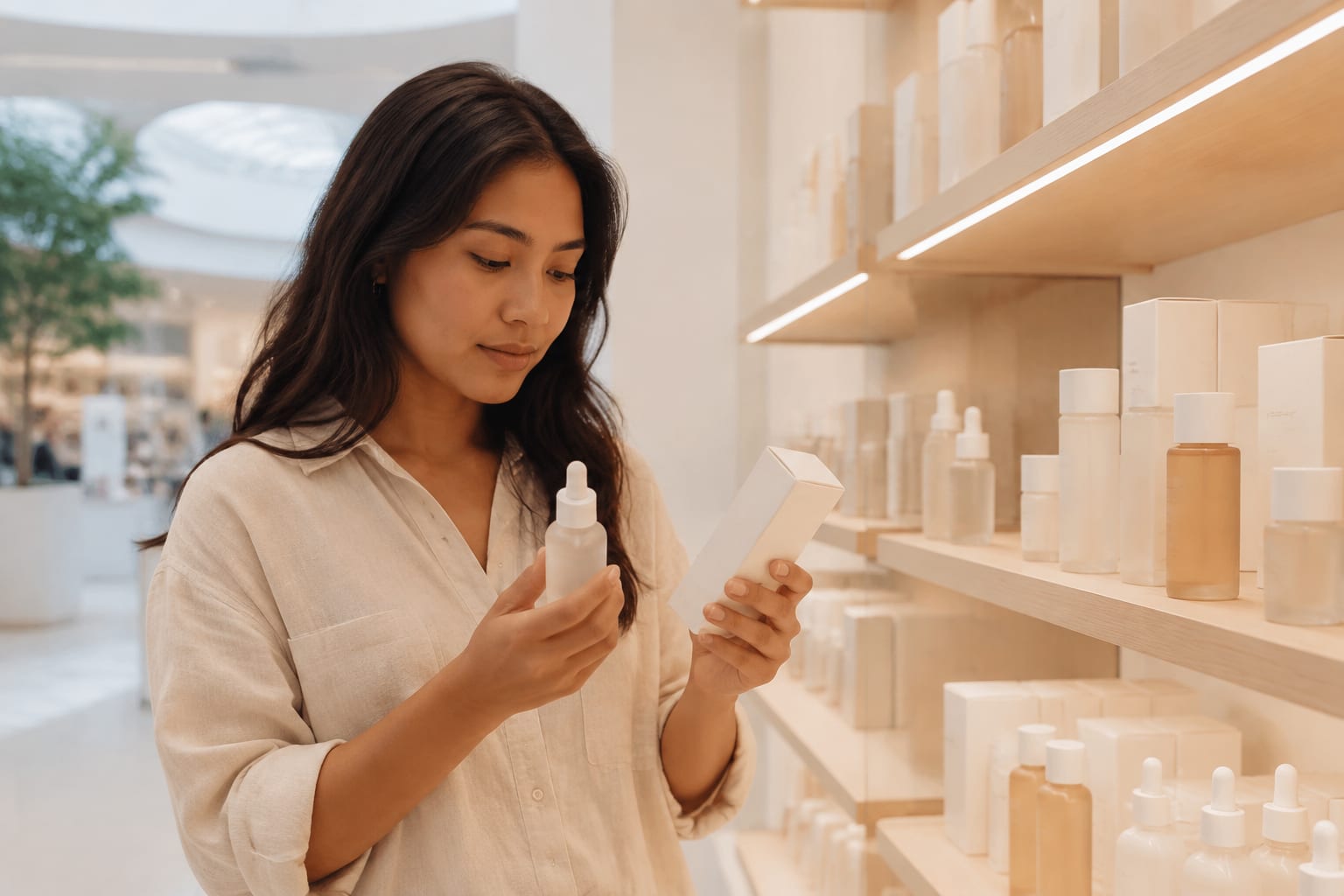
You are standing in the Sephora at ION Orchard holding two serums. One box is quiet: sans-serif type, a percentage printed on the front, a molecule name you had to look up on the MRT ride over. The other one promises glass skin and smells faintly of peach. They cost roughly the same, they sit on the same shelf, and only one of them calls itself clinical.
Medik8's expansion into Sephora is the latest example of a brand that built its name in the professional channel, aesthetic clinics and specialist stockists, moving onto a shelf it now shares with K-beauty ampoules and celebrity lines. It is a pattern worth understanding, because the word clinical is doing a lot of work on that shelf and almost none of it is regulated.
What 'clinical' actually signals on a shelf
There is no legal definition of clinical skincare. No authority checks that a brand earned the word. What it tends to signal, in practice, is a set of formulation and marketing habits that cluster together: a named active at a declared strength, printed on the front of the box rather than buried in the ingredients list; short ingredient lists built around one job, so you can tell what is doing the work; little to no fragrance, and packaging chosen for stability, opaque tubes, airless pumps, small volumes for things that oxidise; a distribution history in clinics, medispas or pharmacies before mass retail; and product names that read like specifications instead of feelings.
That cluster is genuinely useful information. Knowing you are holding 10% azelaic acid, or a retinaldehyde at a stated concentration, or L-ascorbic acid rather than a gentler derivative, tells you how to slot it into a routine and how cautiously to start.
What it does not tell you is that the product was tested more rigorously than the peach-scented one next to it, or that it will suit you. Plenty of brands with soft branding run solid formulation work. Plenty of clinical-looking boxes contain a well-made, entirely ordinary niacinamide serum.
Why clinic-channel brands want Sephora and Watsons
The professional channel is a slow way to grow. A clinic recommends what it stocks, stocks what it trusts, and reaches only the people who walk through the door. Meanwhile the person who actually wants a retinal has already read three Reddit threads, watched a dermatologist on TikTok, and wants to buy the thing today, on the way home, at Orchard or Tampines or Jewel.
Singapore rewards that impulse better than almost anywhere. Sephora, Watsons and Guardian sit inside malls people already pass through daily. Shopee and Lazada handle the restocks. Beauty is priced as an everyday category rather than an occasion. For a brand whose product needs a bit of explaining, being physically present where a customer can hold the bottle and ask a question is worth more than another clinic account.
The trade is discoverability for context. In a clinic, the recommendation arrives attached to a person who looked at your skin, asked what else you are using, and told you how often to apply it. On a Sephora shelf, the same tube arrives attached to a shelf talker.
What changes when a brand moves from clinic to counter
Usually the formula does not change. What changes is everything around it.
The gatekeeper disappears. Nobody is checking whether you are already using a prescription topical, whether your skin is mid-flare, or whether stacking a strong exfoliating acid on top of a retinoid is a sensible idea for you this month. That decision moves to you, standing in a queue, comparing two boxes.
The marketing softens too. Copy written for a doctor to interpret gets rewritten for a browsing shopper, and the caution tends to get shorter. Percentages stay on the box because they sell; the sentence about building up frequency gets smaller. Strength becomes a feature rather than a variable to be managed.
None of this makes mainstream retail a worse place to buy actives. It does mean the responsibility for sequencing, frequency and knowing when to stop shifts onto the person holding the basket.
Reading the label without the clinic conversation
A few habits do most of the work at the shelf. Find the active and its form, not just its family. Vitamin C as L-ascorbic acid behaves differently from ethylated or glucoside derivatives. Retinol, retinaldehyde and retinyl esters are not interchangeable at the same number. Check the strength against your experience, not the highest number available. If you have never used a retinoid, the lowest concentration a brand offers is the one to start with. Read the vehicle. The same active in a rich cream and in a light gel will feel like two different products by 3pm in Singapore.
Count your actives before you add another. If your current routine already has an exfoliating acid and a retinoid, a third strong active is a change, not an addition. Look for a use direction, and take the frequency seriously. Two or three nights a week is a real instruction, not a beginner setting. Note the packaging. Clear jars holding ascorbic acid or retinoids are a reason to hesitate.
Humidity, aircon, and high-strength actives
Singapore does something specific to actives. You leave a cold, dry office, walk five minutes to the MRT, and arrive home warm, damp and slightly sticky. Skin that spent eight hours in air conditioning meets air at high humidity, then goes back the next morning. That swing is why the same 0.3% retinal that a friend in a temperate climate uses nightly might tolerate two nights a week here, and why heavy occlusive balms layered over an acid can feel fine in January abroad and unbearable at home in any month.
A few adjustments hold up in this climate. Lean toward gel, gel-cream and fluid textures for daytime, and save richer creams for after a strong active at night. Apply potentially irritating actives to skin that is dry and cool, not straight after a hot shower or a walk in from outside. Treat sunscreen as part of the active routine rather than a separate concern, and plan a realistic reapplication method, powder, stick or a fluid you will actually keep in your bag. Give a new active four to six weeks before judging it, and change only one thing at a time so you know what caused what.
Sweat is also why texture complaints get mistaken for formula failures. A serum that pills under sunscreen at 8am may simply need thirty seconds longer to absorb, or a lighter moisturiser underneath.
Making the shelf work for you instead of the other way round
The useful thing about clinic-channel brands going mainstream is access. You can now buy a well-formulated retinal, a stable vitamin C or a straightforward azelaic acid in the same trip as your shampoo, compare ingredient lists in person, and ask for a sample before committing to a full bottle.
The part that still takes work is knowing what your skin did in response. Reactions tend to arrive a few days after the decision that caused them, which is exactly when memory gets unreliable. Writing down what you used, on which nights, and how skin felt the following morning turns a guess into something you can read back. If you would rather not keep it in a notes app, you can track your routine with Roona and see how a new active lines up with the weeks that felt calm.
And for anything persistent, painful or changing, a doctor remains the right door. A dermatologist can assess what is happening and discuss options that no shelf carries, which is a different conversation from choosing between two serums.
If you take one thing to the shelf
The word clinical is a hint about formulation style, not a verdict on quality or suitability. Read the active, its form, its strength and its directions, then decide whether it fits the routine you already have and the climate you actually live in.
If you are curious how your current routine holds up under that lens, Roona is a gentle place to start keeping track. No rush, and no need to change anything tonight.
Trend source: Morningstar (SG)
Keep reading
-

After 40, This Viral Skincare Routine May Overwork Your Skin
Why the viral multi-step skincare routine can irritate skin after 40, plus a gentler Singapore routine with acids, retinoids and SPF. 5 September 2026 -
What derm-approved really means at Sephora in Singapore
A practical look at the brands worth your money at Sephora, Watsons and Guardian in Singapore, what derm-approved actually signals, and how to read a label fast. 26 August 2026 -

Sephora's Tween Skincare Lawsuit: What Parents Need to Know
A clear guide for Singapore parents on the Sephora youth skincare lawsuit, ingredient labels, age-appropriate routines, and safer shopping decisions. 8 October 2026