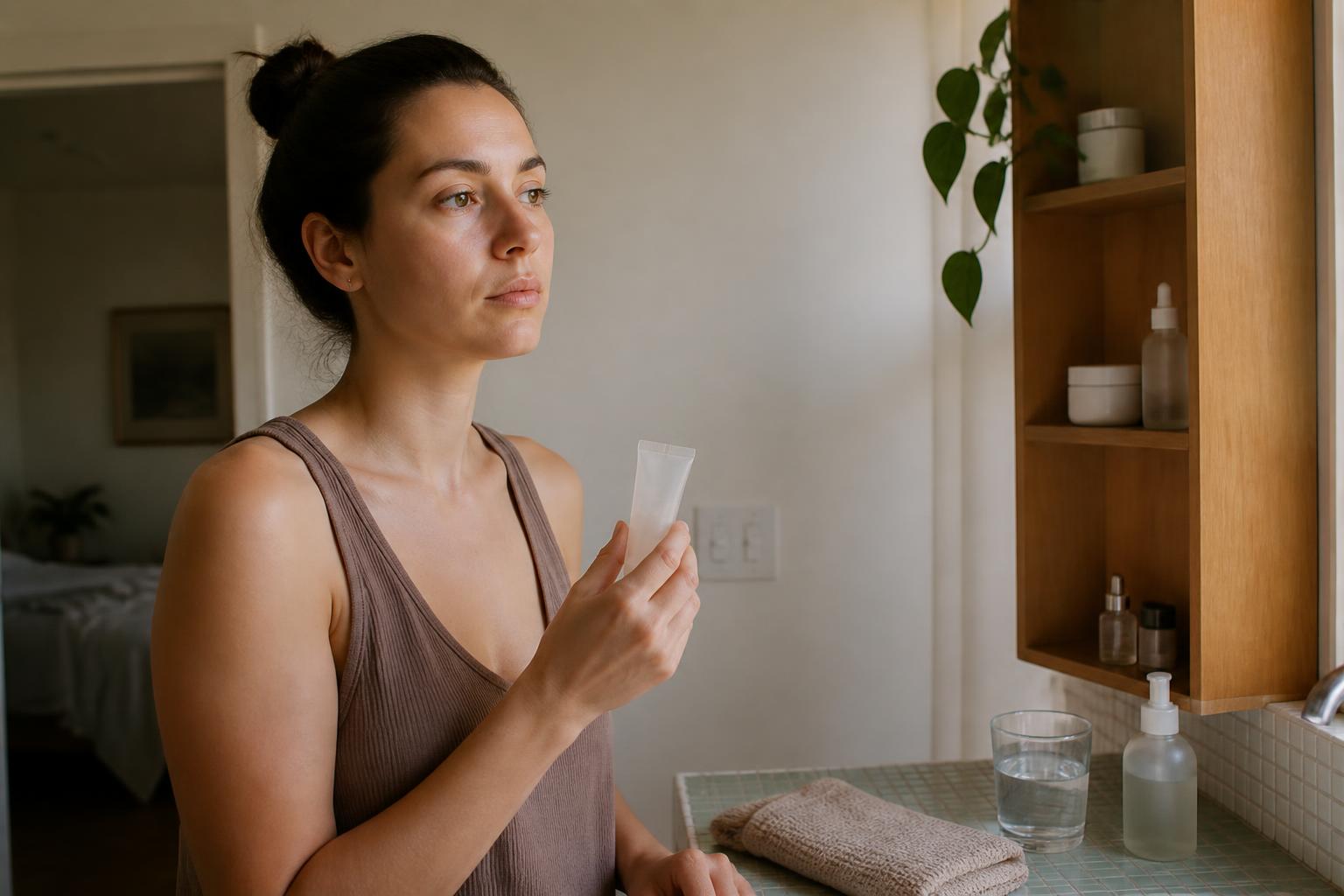
You are standing in the skincare aisle at Target, phone in hand, because a video you watched at midnight showed someone dab a gel under one eye, count to sixty a few times, and turn back to the camera looking noticeably smoother on that side. The tube costs less than lunch. You put it in the cart. Most of us have done some version of this.
Five-minute claims are one of the most reliable viral formats in skincare, and they keep working because they are testable. You can film the before. You can film the after. Nobody has to wait eight weeks and hope. That makes for excellent content. It also means the ingredients doing the work are a specific, narrow group, and knowing which ones they are changes how you shop.
What a five-minute eye gel is actually doing
Fast visible change under the eye comes from a short list of mechanisms, and almost none of them involve remodeling skin.
- Film formers and tightening polymers. Sodium silicate, magnesium aluminum silicate, and various acrylate copolymers dry down into a thin flexible film. As it contracts, it pulls slack skin taut and softens the look of crepey texture. This is the effect behind most dramatic split-screen videos.
- Caffeine. A vasoconstrictor that can temporarily reduce the look of puffiness by narrowing small blood vessels and encouraging fluid to move. Effects show up quickly and fade within hours.
- Humectants. Glycerin, hyaluronic acid, panthenol. These pull water into the top layers of skin, which plumps fine lines so they catch less shadow. Real, immediate, and dependent on you not sitting in dry air all afternoon.
- Light-diffusing minerals. Mica and silica scatter light rather than letting it pool in a crease. Cosmetic, not skincare, and legitimately effective in a mirror.
Every one of those is temporary by design. That is not a scam. A film former under the eye is closer to what a primer does than what a retinol does, and if you want to look less tired before a 9 a.m. meeting, temporary is exactly the product category you want.
Where the claim gets slippery
The language on the tube usually stays technically accurate. Reduces the appearance of puffiness. Visibly smooths. Instantly refreshed. Appearance and visibly are doing quiet, careful work in those sentences.
What trips people up is the jump from a five-minute effect to an expectation of accumulation. If a gel tightens for three hours, using it every day does not eventually tighten permanently. Dark circles caused by pigment or by the natural hollow of the orbital bone do not respond to a film former at all, because there is no slack skin to pull. Neither does under-eye darkness that comes from the blue tinge of vessels visible through thin skin.
One practical tell: if a product's marketing shows a timer, it is selling a same-day effect. If it shows a calendar, it is selling ingredient turnover. Different jobs, different budgets, and there is no reason to skip one for the other.
The test you can run at home
The fun part about a speed claim is that you get to be the one checking it. Do it properly and you will learn more in one morning than a week of scrolling.
- Take a photo in the same spot, same light, before you apply anything. Window light at the same hour on two consecutive days beats bathroom overheads.
- Treat one eye only. Leave the other bare. Uneven puffiness is common, so pick the side that usually looks more swollen so you are not stacking the odds in the product's favor.
- Wait the stated time, then reshoot from the same distance and angle.
- Reshoot again at lunch, and once more at the end of the day. This is the step people skip, and it is the one that tells you how long you are actually buying.
- Note what else was going on. Sodium-heavy dinner, three hours of crying at a movie, four hours of sleep, seasonal allergies, a red-eye flight. Puffiness has a lot of inputs.
If the effect holds for four hours, you have a useful morning product. If it is gone by the time you reach your desk, you have a nice sensory experience and not much else. Both answers are worth knowing before you rebuy. Logging it somewhere beats trusting your memory: you can track what your skin does day to day with Roona and see the pattern instead of guessing at it.
Why Target is where this trend lives
Accessible retail is the engine here. A viral prestige serum sends people to a Sephora website and a waitlist. A viral drugstore eye gel sends people to a store they were already going to for paper towels, at a price where a miss costs almost nothing. That low stakes threshold is what turns a video into a sold-out endcap.
It also means the formulas skew toward fast, showable effects rather than slow actives. Slow actives are hard to film. A tightening polymer is not.
A few things worth doing in the aisle:
- Read the first six ingredients. That is where the bulk of the formula sits, and it will tell you whether you are buying humectants, a film former, or mostly water and fragrance.
- Check for fragrance if your under-eye area stings easily. The skin there is thin and reacts more readily than your cheeks.
- Look at the packaging format. A jar you dip fingers into is fine for a gel with preservatives, but a metal rollerball also gives you a cooling effect, and cold alone reduces puffiness.
- Skip anything promising to erase or eliminate. That is not how under-eye skin works, and the overreach usually signals thin formulation underneath.
Building a routine that does not depend on the five minutes
The morning gel is the accessory. What actually shifts how the under-eye area looks over months is duller and less filmable.
Sleep is the big one, and not in a motivational-poster way: fluid distribution changes when you are horizontal for six hours versus four, and it shows up first under the eyes. Sun protection matters because the skin there is thin and photoaging is cumulative. A gentle formulation with mineral filters or a stick sunscreen is easier to apply close to the lash line without stinging. Then there is barrier support: a bland moisturizer with ceramides or squalane over the whole eye area, applied at night, keeps that skin from getting tight and papery in dry indoor heat.
Winter in the northern half of the country is brutal on this specific patch of skin. Forced-air heating drops indoor humidity, and thin skin loses water first. If your under-eyes look crepier in January than in July, humidity is a more likely explanation than aging. A humidifier in the bedroom does more for that than any gel.
If you use retinoids, keep them on your face and go carefully near the orbital bone, or use a dedicated lower-strength eye product. Irritated under-eye skin looks puffier and pinker, which is the opposite of what you were going for.
What to take away
A five-minute eye gel is a legitimate tool with a short shelf life on your face. Buy it for the mornings you need to look rested, use it the way you use concealer, and judge it on how long the effect holds rather than on whether it changes anything permanently. Then put your patience into the slower things: sleep, sun protection, a moisturizer you actually enjoy applying, and enough humidity in the room where you sleep.
If you want to see whether that gel earns its spot, keep notes for two weeks and let the pattern show up on its own. Roona is there if you would like a calmer place to keep track.
Trend source: USA Today (US)
Keep reading
-
Eye-Area Skincare: What Works for Puffiness and Fine Lines
Learn what eye creams, caffeine, retinoids, peptides, sunscreen, and cold compresses can realistically do for puffiness and fine lines. 30 August 2026 -
When Skincare Became Content: The Movie Theater Moment
A creator filmed her nighttime routine mid-screening and the internet erupted. A calm look at what performed self-care costs, and how to get your routine back. 18 August 2026 -

Honey in skincare: what it really does and when it works
Honey is trending in skincare, but raw honey, honey extract, and medical-grade honey serve different purposes. Learn what each one does. 10 October 2026