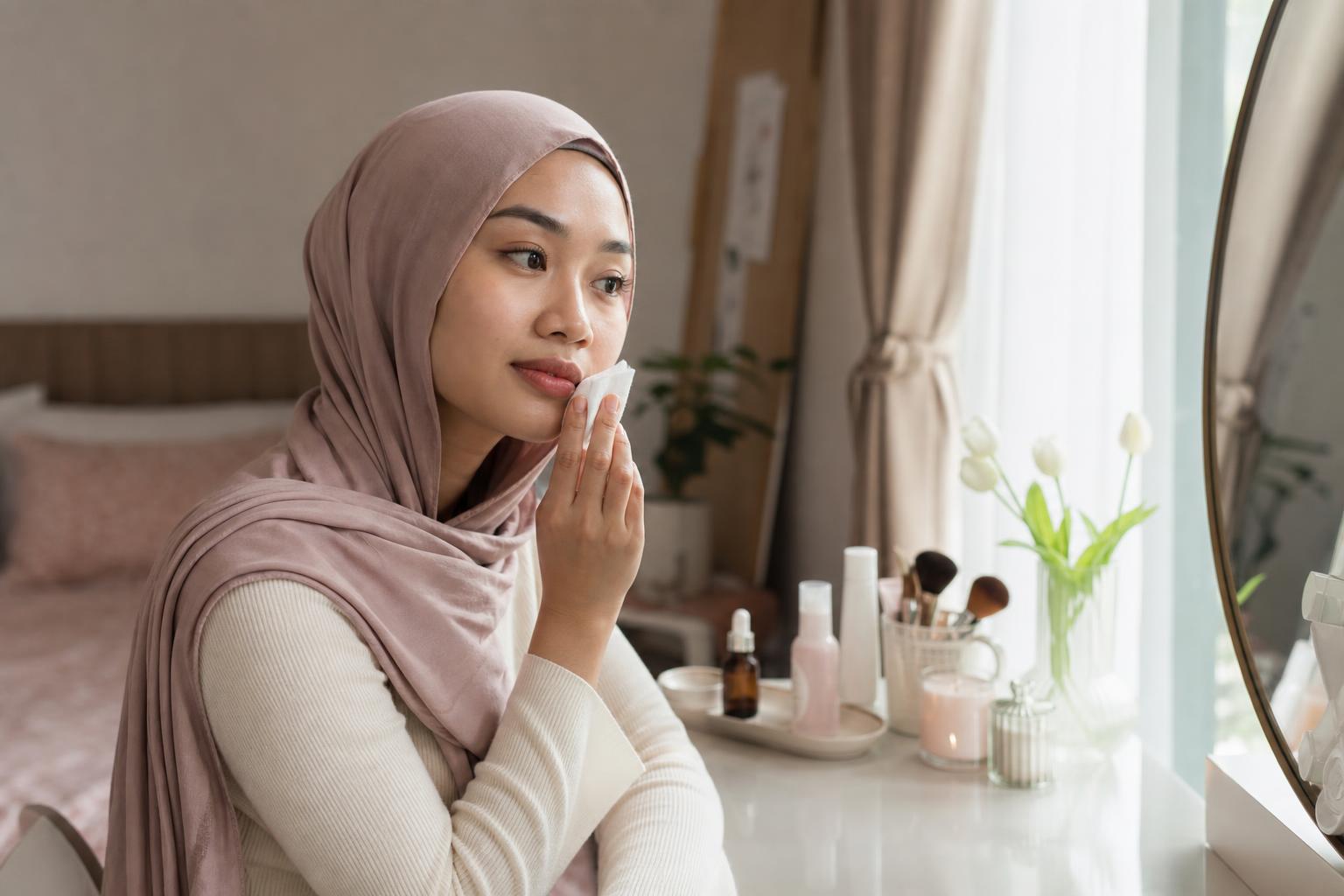
You roll out of an air-conditioned office into the midday Kuala Lumpur heat, and within minutes your makeup has started to slide. The concealer you patted on so carefully this morning has settled into creases, and the foundation you thought looked natural indoors now feels heavy. If this sounds familiar, you're not chasing the wrong products. You might just need a different approach.
Malaysian makeup artists who work through weddings that run from morning prayers to midnight receptions know something most of us don't: the techniques matter more than the products. These are the methods they return to when a bride needs to look fresh through five outfit changes in 35-degree weather, or when a client's skin is dehydrated from moving between air-conditioning and humidity all day. None of them went viral on social media. Most of them predate the internet entirely.
Start with ice, not primer
The ice trick is exactly what it sounds like. Wrap a clean ice cube in a thin cotton cloth and glide it across your face for 30 to 60 seconds before you apply anything else. The cold temporarily tightens pores, reduces puffiness around the eyes, and gives your skin a firmer surface to work with.
In Malaysia's heat, this step does double duty. It cools down skin that's already warm from your morning commute, which means your makeup goes on more evenly and stays put longer. Makeup artists working backstage at events often keep a small cooler nearby for this exact reason.
The timing matters. Do this right before makeup, not an hour before when you're still in your towel. If your skin feels too cold or numb, you've overdone it. You want it cool and awake, not frozen.
Apply concealer after foundation, not before
Most of us were taught to conceal first, then blend foundation over the top. Makeup artists do it backwards. Foundation goes on first, then concealer only where you actually need it.
Foundation already evens out a lot. When you apply it first, you can see exactly which spots still need attention. A dark circle that looked obvious on bare skin might need only a dot of concealer once foundation is on. This approach uses less product overall, which means less weight on your skin and less chance of creasing by lunchtime.
For Malaysian humidity, this matters even more. The less product you layer on, the better everything wears. If you're using a full-coverage foundation, you might not need concealer at all except for the very inner corner of your eyes or a specific blemish.
Set with powder only where you need it
You've probably heard that powder sets makeup and controls oil. Both things are true, but setting your entire face with powder in a humid climate often backfires. It can look cakey within an hour, and it emphasizes dry patches you didn't know you had.
Makeup artists powder strategically. They focus on the T-zone (forehead, nose, chin) where oil shows up first, and skip areas that tend to be drier, like the cheeks and around the eyes. If you wear a hijab, you'll want to set along your jawline and temples as well, anywhere fabric touches skin.
Use a light hand. Press the powder in with a puff rather than sweeping it on with a brush. Pressing gives better staying power. Sweeping just moves your foundation around.
Cream products over powder when you can
In high humidity, cream blush, cream bronzer, and cream highlighter hold up better than their powder counterparts. They melt into skin instead of sitting on top of it, which means they don't separate or fade as quickly when you start to sweat.
This runs counter to old advice about oily skin needing powder formulas. But Malaysian makeup artists learned years ago that creams actually last longer here, as long as you're setting the base (foundation and concealer) properly in your oily zones.
Apply cream products with your fingers, not a brush. Your body heat helps them blend. If you're shopping at Watsons or Guardian, look for cream blushes in twist-up stick form.
Blot, don't powder, when you get shiny
When oil breaks through midday, your instinct might be to add more powder. Makeup artists reach for blotting papers instead.
Powder on top of oil creates a paste that sits on your skin and looks heavy. Blotting papers lift the oil without adding anything, so your makeup looks the way it did when you first applied it. Keep a pack in your bag. Press the paper gently on shiny areas, don't rub or wipe.
If you don't have blotting papers with you, the paper seat covers in public restrooms work just as well. They're made from similar material. Tear off a small square and fold it.
Lips last, always
Makeup artists apply lip color as the final step for a reason. If you do lips first, you'll inevitably smudge them while working on your eyes or blending your base. You'll touch them without thinking, or a brush will graze your mouth.
But there's another reason that matters more in Malaysia's climate: when lips are the last thing you do, you can adjust the intensity based on how the rest of your face turned out. If your base looks dewier than you planned, you might want a stronger lip to balance it. If everything else is muted, a subtle lip makes sense.
Apply lip liner all over your lips, not just around the edges. This creates a base that helps color last longer, especially through meals and drinks. You can find affordable options from local brands at any pharmacy.
Track what actually works for you
There's no single right technique for everyone. Your skin changes with your cycle, with stress, with the seasons (even Malaysia's subtle ones), and with age. What works beautifully in an air-conditioned office might slide off during an outdoor event.
Pay attention to which combinations hold up. If a certain primer and foundation pairing lasts through your commute and your morning meetings, note it. If cream blush fades by noon but powder blush makes it to evening, that tells you something. Track your routine with Roona so you can spot patterns over time, especially if you're trying new products or techniques.
The goal isn't to find a perfect routine that works forever. It's to build a flexible approach you can adjust based on what your day looks like and how your skin feels.
When to ignore all of this
These techniques work for daily wear, for skin that cooperates most of the time, for makeup that needs to last through a normal day. They're less useful if you're dealing with active breakouts, significant texture, or a special event where you need makeup to photograph well under specific lighting.
If your skin is irritated or healing from a procedure, skip the ice and skip the layering. Simple is better. If you're attending a wedding or any event with professional photography, the usual rules change because camera-ready makeup needs different techniques than real-life makeup.
And if a method doesn't feel right on your skin, trust that. Makeup artists develop these techniques through repetition and observation, but they also adjust for each face they work on. Your skin knows what it needs better than any general rule.
Where to start
You don't need to change everything at once. Pick the technique that addresses your biggest frustration. If your makeup slides by noon, try the ice step and strategic powder setting. If your concealer creases, switch the order and apply it after foundation. If everything feels heavy, move to cream products.
Give each change at least a week before you decide whether it works. Your skin needs time to adjust, and you need time to get the application right. One technique applied well will make more difference than five techniques rushed.
Makeup in Malaysia's climate requires small adjustments, not complete overhauls. These are the adjustments makeup artists have been making quietly for years, long before anyone thought to film them. They work because they're based on how skin actually behaves when it's warm, when it's humid, when it's moving between extremes all day. That's not going to change, which is exactly why these techniques haven't either.
Trend source: The Guardian (MY)
Keep reading
-
Sephora Afterpay Sale Singapore: What to Buy and Skip
Make smarter Sephora Afterpay Sale purchases in Singapore with a practical guide to useful skincare, makeup and haircare deals worth skipping. 27 August 2026 -
Why Asian Skin Is Not a Monolith, Says Dr Teo Wan Lin
Dr Teo Wan Lin explains why Asian skin needs more than one beauty label, with practical formulation lessons for Malaysia's climate and routines. 27 August 2026 -
Beauty Advent Calendars in April Have Lost the Plot
Beauty gift sets are arriving months early. For shoppers in Malaysia, heat, storage and real routines expose the limits of calendar-led marketing. 27 August 2026