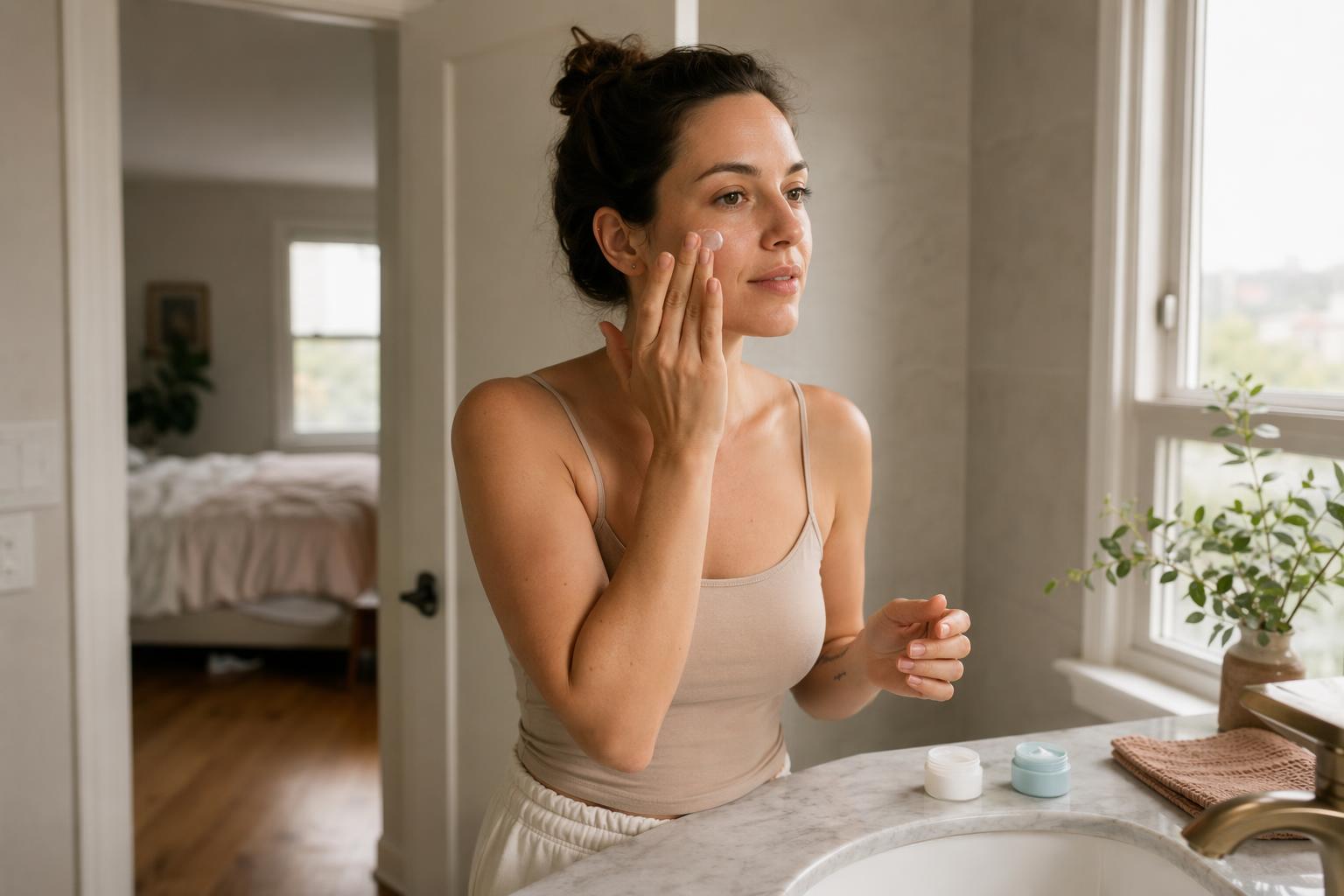
You tap into an Instagram story and there it is again: a blue tub with a little device beside it, someone patting their cheeks in front of a ring light. By the third ad you've stopped asking whether it works and started asking why it keeps following you around. Medicube has had that kind of year in the United States, stocked on shelves people actually walk past and reviewed by outlets that usually take their time with K-beauty launches.
So here's a plain read on the range: what the formulas are built around, where the money tends to go furthest, and which pieces you can skip without missing anything.
What Medicube Is Actually Selling
The brand runs on two tracks. One is skincare in fairly familiar categories: exfoliating pads, niacinamide-forward serums, collagen-branded creams and jellies, and the Zero Pore line aimed at texture and visible pores. The other is at-home devices, most visibly the Age-R family, which combine microcurrent, LED and booster modes in a handheld unit.
That split matters when you're deciding what to buy. The skincare sits in a crowded space where you can find comparable actives from dozens of brands at Ulta or Sephora. The devices are the reason people talk about Medicube specifically, and they're also where the price jumps and the claims get loosest.
The Ingredients Doing the Real Work
Strip the packaging away and most of the range leans on a small set of well-studied ingredients:
- Niacinamide, which supports the barrier and can soften the look of uneven tone with consistent use
- Glycolic and lactic acid in the pad formats, for surface texture and dullness
- Panthenol, glycerin and hyaluronic acid as the humectant and soothing base across the creams
- Peptides, marketed heavily under the collagen umbrella
- PHAs in the gentler exfoliating options, slower and less stinging than glycolic
None of that is unusual, and that's the useful part. If a Medicube product suits your skin, it's because those ingredients suit your skin, not because of anything proprietary. The reverse is also true: if glycolic pads have burned you before, a Medicube version will too.
One thing worth flagging on the exfoliating pads specifically. They're easy to overuse because they feel like a wipe rather than a treatment, and two swipes a day will thin out your tolerance fast. Two or three nights a week is plenty for most people, and if you're also using a retinoid, alternate them rather than stacking.
Where the Range Earns Its Place
The hydrating and barrier-support end of the lineup is the least dramatic and the most reliable. The collagen jelly cream and similar occlusive-leaning textures do what a good moisturizer does: hold water in, calm the tight feeling after cleansing, sit well under SPF in the morning. That's genuinely useful from November through March, when forced-air heating in most American apartments pulls moisture out of the room and out of your face.
The niacinamide serums are also a fair buy if you don't already own one. They layer cleanly, they don't fight with sunscreen, and they suit oilier and combination skin without the heaviness of a cream-textured treatment.
And the Zero Pore line? It manages oil and makes texture look smoother in the short term. It does not shrink pores, because pore size is largely down to genetics and oil production. If you buy it expecting the first thing, you'll be happy. If you buy it expecting the second, you'll be disappointed and you'll blame the wrong product.
Where the Hype Runs Ahead of the Evidence
Microcurrent and LED devices are the least settled part of the story. There is real research behind both technologies in clinical settings, but the strength, wavelength and session length in a handheld consumer unit are not the same as what a dermatologist's office uses, and the results people report are usually subtle and temporary. Firmness that shows up for a few hours after a session is a real effect. It is not the same as long-term change in skin structure.
The practical issue is compliance. These devices ask for several sessions a week, indefinitely, plus a conductive gel that runs out and needs repurchasing. If you already skip your moisturizer twice a week, a device is not the thing to spend on. Buy it because you enjoy the ritual and you'll actually keep it up, not because you think it will replace a habit you don't have yet.
Be cautious too with anything sold as an anti-aging device if you're pregnant, have a pacemaker or implanted electronic device, or have active inflammatory conditions on your face. Microcurrent has straightforward contraindications and the marketing rarely leads with them.
How to Test It Without Burning Money
The biggest mistake with any viral range is buying four things at once. When something reacts, you have no idea which product did it, and you end up shelving all four.
A slower approach that actually tells you something:
- Pick one product that fills a real gap in your routine, not one that duplicates something you own
- Use it alone for two to three weeks before adding anything else new
- Keep the rest of your routine, including sunscreen, completely unchanged
- Note how your skin feels in the morning, not just how it looks right after application
- Decide at the four-week mark, since barrier and tone changes take that long to show
If you want that comparison to hold up, write it down somewhere. Memory is generous with anything you paid a lot for, which is exactly why the expensive purchase always seems to be working. You can track how a new product settles in with Roona and see the pattern across weeks instead of relying on how your face looked in this morning's light.
A Reasonable Way to Spend on It
If you're starting from a fairly minimal routine, the order that makes sense is unglamorous. Get your cleanser, moisturizer and daily SPF settled first, because those carry most of the visible outcome. Add one active, most likely niacinamide or a gentle exfoliant, and let it run. Consider a device last, if at all, and only when the basics have been steady for a couple of months.
Medicube's better products are competent versions of things that work. That's a compliment, and it's also the ceiling. The brand's marketing implies a shortcut, and there isn't one, from Medicube or anyone else.
Before your next add-to-cart, it's worth checking which gap you're actually filling. If it helps to see your routine laid out in one place first, Roona is there when you want it, no rush either way.
Trend source: Good Housekeeping (US)
Keep reading
-

7 Viral Glass-Skin Hacks: What Actually Works
Spoon massages, overnight sheet masks, slugging and more: a calm look at which viral glass-skin hacks affect your skin and which are just satisfying to film. 31 July 2026 -

Spicules: The K-Beauty Tech, Explained Honestly
Sponge spicules promise deeper delivery and faster results. What they actually do to skin, who they suit, and how to use them in humid Singapore. 28 July 2026 -
Glowcations: Why Seoul Is the New Skincare Getaway
Seoul's skincare travel trend blends clinic appointments, K-beauty shopping, and routine planning into a more thoughtful alternative to the spa weekend. 5 September 2026