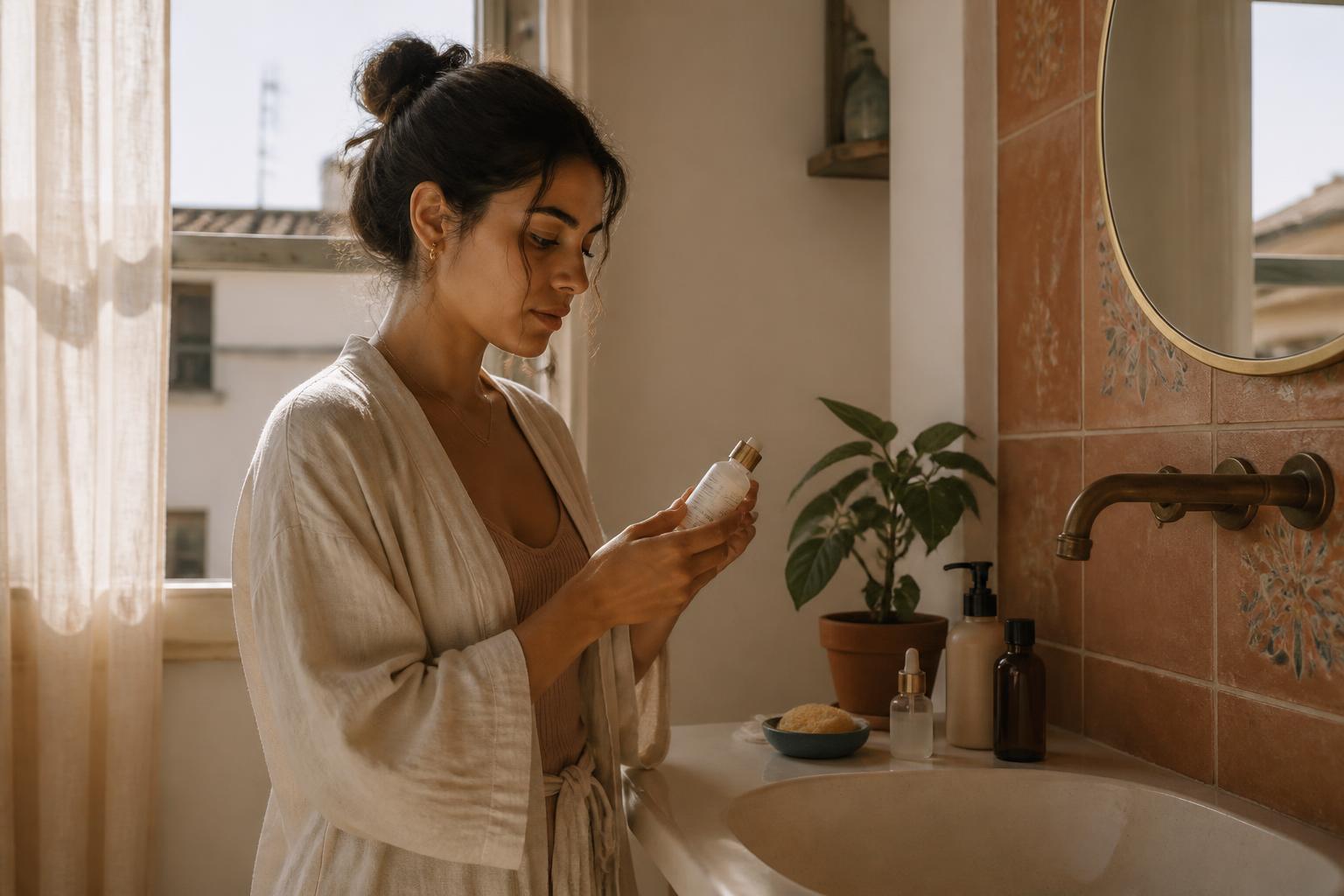
You saw the serum on TikTok Shop, the bottle looked beautiful, and the creator said it changed everything in a week. It arrived, you used it for four days, your cheeks went tight and pink, and it joined the drawer with the other three bottles you bought the same way. That drawer is the reason a lot of readers in Mexico have started asking a different question before they buy: what is actually in this, and does the ingredient have evidence behind it?
That shift has a name in Spanish-language beauty coverage: the move from viral skincare to dermocosmetics. It is less about abandoning trends and more about changing the order of operations. Ingredient first, format second, creator third.
What "dermocosmetics" actually means on a Mexican shelf
The word gets used loosely, so it helps to pin it down. Dermocosmetics are cosmetic products formulated around ingredients with published research behind them, usually at concentrations and pH ranges the brand is willing to state on the box. Think niacinamide, azelaic acid, adapalene in the over-the-counter retinoid category, salicylic acid, glycolic acid, ceramides, panthenol, zinc PCA, mineral and chemical UV filters.
In Mexico you find them across a wider price range than the term suggests. Pharmacy chains like Farmacias del Ahorro and Benavides carry dermocosmetic lines next to Pond's and Cicatricure, both of which have leaned into named actives on their packaging rather than vague promises. Liverpool and Sephora México stock the imported tier. Mercado Libre and TikTok Shop carry everything, including sellers you have never heard of.
The useful distinction is not pharmacy versus department store. It is whether the label tells you what is doing the work.
Why the conversation changed
Part of it is simple accumulation. Enough people bought enough viral products that the failure rate became visible. A creator with a naturally resilient barrier can use a strong acid three nights a week and look great on camera. Someone with rosacea-prone skin on the dry central plateau cannot, and no amount of enthusiasm in the video changes that.
Part of it is that ingredient vocabulary spread. Readers who learned the word "niacinamide" from a trend then used it to compare a costly imported serum with a pharmacy one and found the pharmacy one listed a concentration. Once you can read a label, marketing loses some of its grip.
And part of it is price sensitivity working in your favour. When a product costs real money, you want a reason to believe it will do something. Ingredient literacy is the cheapest form of consumer protection available.
COFEPRIS, and what a registration does and does not tell you
In Mexico, cosmetic products are notified to COFEPRIS, the federal health regulator. Seeing that a product is properly registered is a signal worth checking, especially for anything bought through a marketplace or a livestream, because it means the product entered the country through a channel that answers to someone.
What it does not tell you is whether the formula suits your skin, whether the active is present at a level that does anything, or whether the bottle you received is what the brand actually made. Counterfeits of popular sunscreens and serums circulate on resale platforms. A few habits reduce the risk:
- Buy actives and sunscreens from pharmacies, department stores or the brand's own official store rather than third-party marketplace sellers.
- Check that the packaging lists a Mexican importer or distributor with an address.
- Treat a price far below the pharmacy price as a warning, not a win.
- Be wary of products promising to erase melasma or scars outright. Cosmetics can improve appearance; claims of cure belong to a dermatologist's office, not a caption.
Your climate matters more than the trend cycle
This is where imported routines break down. A five-step Korean layering routine designed for Seoul humidity behaves differently in Mexico City, where the altitude means stronger UV exposure and the air in the dry months pulls moisture out of everything. The same reader who needs a rich cream in Guadalajara in March may want almost nothing but gel and sunscreen in Cancún in August.
So build for where you are, and expect to adjust twice a year rather than every time a new product goes viral.
High altitude and dry season, roughly the central plateau from late autumn through spring: sunscreen is the non-negotiable step, applied every morning and reapplied if you are outdoors through midday. Support the barrier with ceramides, glycerin, squalane or panthenol, and go gentler on exfoliating acids than the packaging suggests, because dry air plus strong UV plus a nightly acid is how barrier irritation starts.
Humid coasts and the rainy months: lighter gel textures, sunscreens that do not slide, and salicylic acid if congestion is your pattern. Humidity does not mean you can skip moisturiser, it means you can use a thinner one.
Anywhere, year round: reapplication beats a higher number on the bottle you only apply once. A powder or stick sunscreen in your bag makes the second application actually happen.
How to read a product like someone who has been burned before
You do not need a chemistry background. You need a short checklist you run before you tap buy.
- Find the active and its concentration. If the front says "brightening" and no ingredient is named anywhere, the product is selling an idea.
- Check where the active sits in the ingredient list. Something listed after the fragrance and preservatives is present in small amounts.
- Count how many strong actives you would be using at once. One exfoliating acid or one retinoid in a routine is plenty. Two is where most irritation stories begin.
- Look for a stated purpose that matches your actual concern. Azelaic acid for post-acne marks and redness. Niacinamide for oil and uneven tone. Adapalene for persistent breakouts. Salicylic acid for clogged pores.
- Decide on the format honestly. If you dislike heavy creams you will not use one, however good the formula is.
The hardest part is patience. Most actives need weeks of consistent use before you can judge them, and pigment concerns take longer than breakouts do. Four days is not a trial.
Trends still have a place
TikTok is a good discovery engine and a poor prescription. Creators surface products you would never find on a pharmacy shelf, explain application in a way no leaflet manages, and occasionally catch a genuinely well-formulated launch early. Use them for that.
What is worth resisting is the pace. The feed produces a new must-have faster than any skin can respond to one, and buying at that speed guarantees you will never know which product helped. Keeping a simple record of what you introduced and when turns a drawer of guesses into information you can act on, which is exactly what tracking your routine with Roona is for.
A routine that survives the next viral product
A version that works for most people in most parts of Mexico:
- Morning: gentle cleanser or just water, moisturiser suited to the season, sunscreen. Reapply the sunscreen if your day takes you outside.
- Evening: cleanser, one active if you are using one, moisturiser.
- Two or three nights a week at most for an exfoliating acid or retinoid, and fewer during the driest months.
- One new product at a time, given three to four weeks before you judge it.
Everything else is optional. Essences, masks, eye creams and the rest can be pleasant, and none of them substitute for consistent sunscreen and a barrier that is not being pushed too hard.
If you want to know which of your products is earning its place, start by writing down what you use for two weeks and how your skin feels at the end of each one. You can keep that log in Roona if paper tends to disappear on you. Either way, the pattern you find will be more useful than the next thing in your feed.
Trend source: lahora.cl (MX)
Keep reading
-

Sephora's Tween Skincare Lawsuit: What Parents Need to Know
A clear guide for Singapore parents on the Sephora youth skincare lawsuit, ingredient labels, age-appropriate routines, and safer shopping decisions. 8 October 2026 -
After 40, This Viral Skincare Routine May Overwork Your Skin
Why the viral multi-step skincare routine can irritate skin after 40, plus a gentler Singapore routine with acids, retinoids and SPF. 5 September 2026 -
Sephora Afterpay Sale Singapore: What to Buy and Skip
Make smarter Sephora Afterpay Sale purchases in Singapore with a practical guide to useful skincare, makeup and haircare deals worth skipping. 27 August 2026