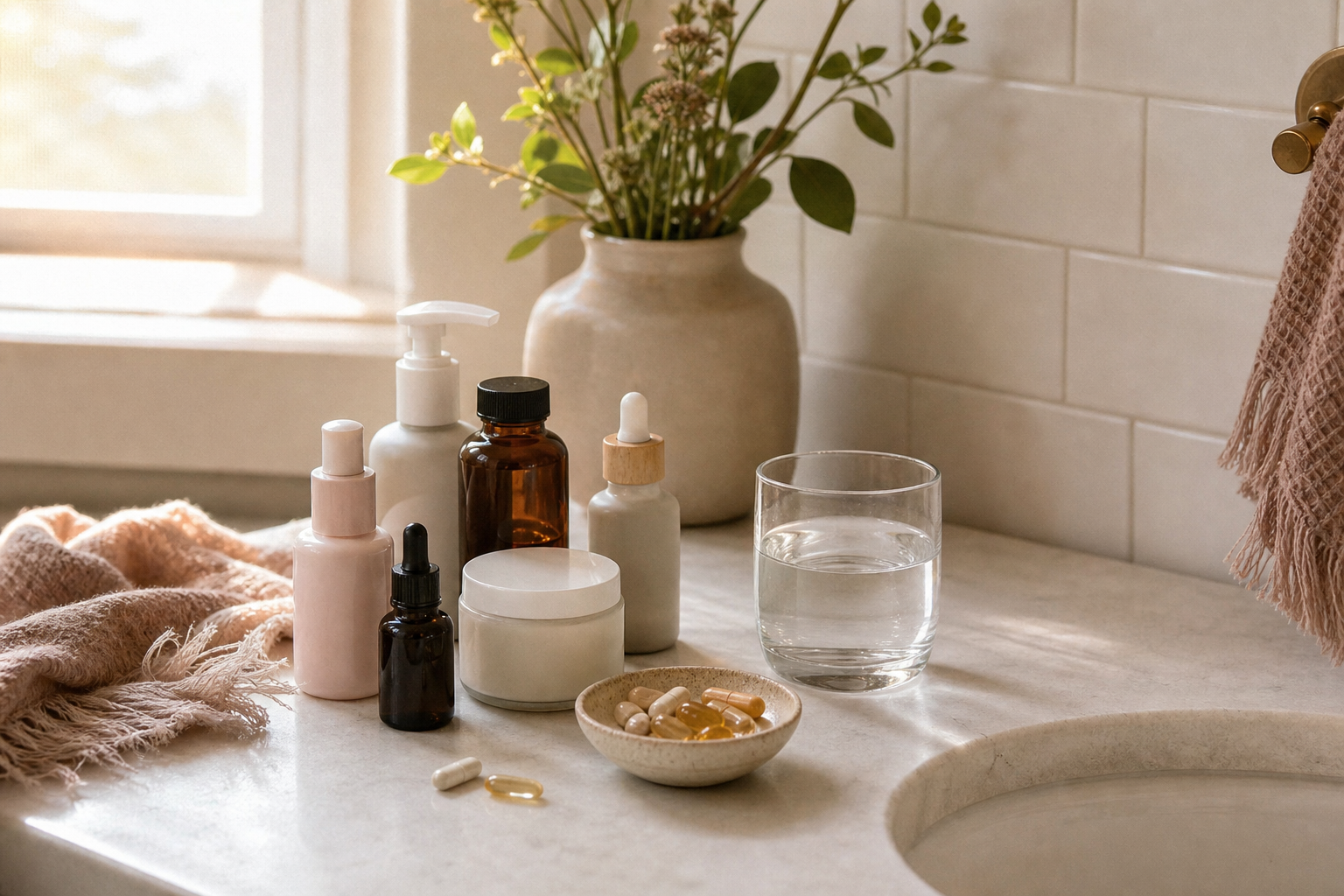
You open your bathroom cabinet and see a serum next to a magnesium supplement, a moisturizer beside a sleep mask. The line between skincare and wellness stopped being clear a while ago, at least in how most of us actually live. Ulta's new Good Day line makes that official, packaging products that sit somewhere between both categories and betting that shoppers are ready for it.
The launch matters less for what it sells and more for what it signals. When a major retailer positions a line this way, it reflects a shift already happening in how people think about their routines. Skincare is no longer just about what you put on your face. It's tangled up with sleep, stress, hydration, and the hundred other things that show up on your skin whether you address them or not.
The wellness-skincare crossover is not new, but it is accelerating
Ingestible beauty has been around for years. Collagen powders, skin supplements, and beauty vitamins have long occupied the space between the supplement aisle and the skincare shelf. What is different now is how mainstream retailers are framing it. Good Day is not tucked into a wellness corner at Ulta. It is presented as skincare, with the same level of attention to packaging, ingredient storytelling, and routine integration you would expect from any other face serum or cream.
This reflects how the conversation has evolved. Five years ago, the debate was whether ingestibles worked at all. Now, the question is which ones are worth the money and how they fit into what you are already doing.
What shoppers are actually looking for
The skincare-wellness crossover works because it matches how people already approach their skin. You know that a bad night of sleep shows up under your eyes. You notice when dehydration makes your skin look flat. You have probably tried cutting out dairy or sugar at some point to see if it helped with breakouts. These connections are not new information. What is new is products and retailers acknowledging them directly instead of pretending skincare happens in a vacuum.
That said, the appeal is about narrative. Wellness-forward skincare gives you a way to think about your routine as part of a larger system, which feels more sustainable than chasing the next miracle ingredient. It reframes skincare as something you do with your body, not to your face. For people exhausted by the constant churn of new actives and trending products, that shift in perspective can be a relief.
The risk, as always, is overpromising. Skincare-wellness crossovers can slide into vague claims about balance, glow, and radiance that do not mean much. The good ones stay specific: this helps with hydration, this supports your skin barrier, this gives you a dose of antioxidants your diet might be missing.
How to think about adding wellness products to your routine
If you are considering products that blend skincare and wellness, start with what you already know is missing. Are you consistently dehydrated? A hydration supplement or electrolyte drink might make more difference than another hyaluronic acid serum. Do you get enough omega-3s in your diet? A fish oil or algae supplement could support your skin barrier in ways a topical cannot fully replicate.
A few things to keep in mind:
- Supplements take longer to show results than topicals. Give any ingestible at least eight weeks before deciding whether it is working.
- Overlap matters. If you are already taking a multivitamin, check what is in it before adding a separate skin supplement. More is not always better, especially with fat-soluble vitamins.
- Quality varies widely. Look for third-party testing, transparent ingredient sourcing, and brands that do not make exaggerated claims about erasing wrinkles or reversing aging.
- Track what you are doing. If you add three new products at once, you will not know what is actually helping. Track your routine with Roona to see patterns over time and make adjustments based on what your skin is telling you.
What this means for the future of skincare retail
Ulta's move suggests that wellness-skincare hybrids are not a niche anymore. Expect more brands to position products this way, and more retailers to create dedicated space for them. Sephora already carries ingestibles and tools that blur the line. Smaller brands have been doing this for years. The difference is scale. When a major retailer commits shelf space and marketing dollars to a category, it becomes part of the mainstream conversation.
This could be good for shoppers who want more options and a more integrated approach to skincare. It could also lead to more noise, more confusing claims, and more products that promise everything and deliver very little. The key will be staying grounded in what actually works for you, rather than getting swept up in the idea that wellness-skincare is inherently better or more effective than what you are already doing.
Building a routine that actually feels sustainable
The skincare-wellness crossover works when it simplifies your life, not when it adds more steps you will not keep up with. If a product helps you address something your topical routine cannot fix on its own, great. If it just gives you one more thing to remember and one more monthly subscription, it is probably not worth it.
Pay attention to what makes your routine feel sustainable over time. That might mean a supplement that improves your sleep, which in turn improves your skin. It might mean a hydration drink that helps you actually drink enough water. It might mean nothing at all, and your current routine is already working. The point is not to add wellness products because the industry says you should. The point is to recognize that your skin does not exist separately from the rest of your body, and sometimes the most effective skincare step happens before you ever touch your face.
The Ulta x Good Day launch is not going to change your routine overnight. But it is a useful reminder that the boundaries between skincare, wellness, and self-care are blurrier than ever, and that is probably closer to how most of us have been thinking about it all along.
Trend source: BeautyMatter (US)
Keep reading
-
How to Choose a Skincare Tracking App You'll Still Open in Week Six
Most skincare trackers get abandoned by week three. Two things predict whether one actually works for you: how long a single entry takes on a bad night, and where your progress photos end up living. 28 July 2026 -

Tan-Maxxing: What Skipping SPF Costs You Later
Tan-maxxing videos make skipping sunscreen look harmless. Here is what sun exposure does over time, and how to enjoy summer without wrecking your skin barrier. 28 July 2026 -
Spicules: The K-Beauty Tech, Explained Honestly
Sponge spicules promise deeper delivery and faster results. What they actually do to skin, who they suit, and how to use them in humid Singapore. 28 July 2026