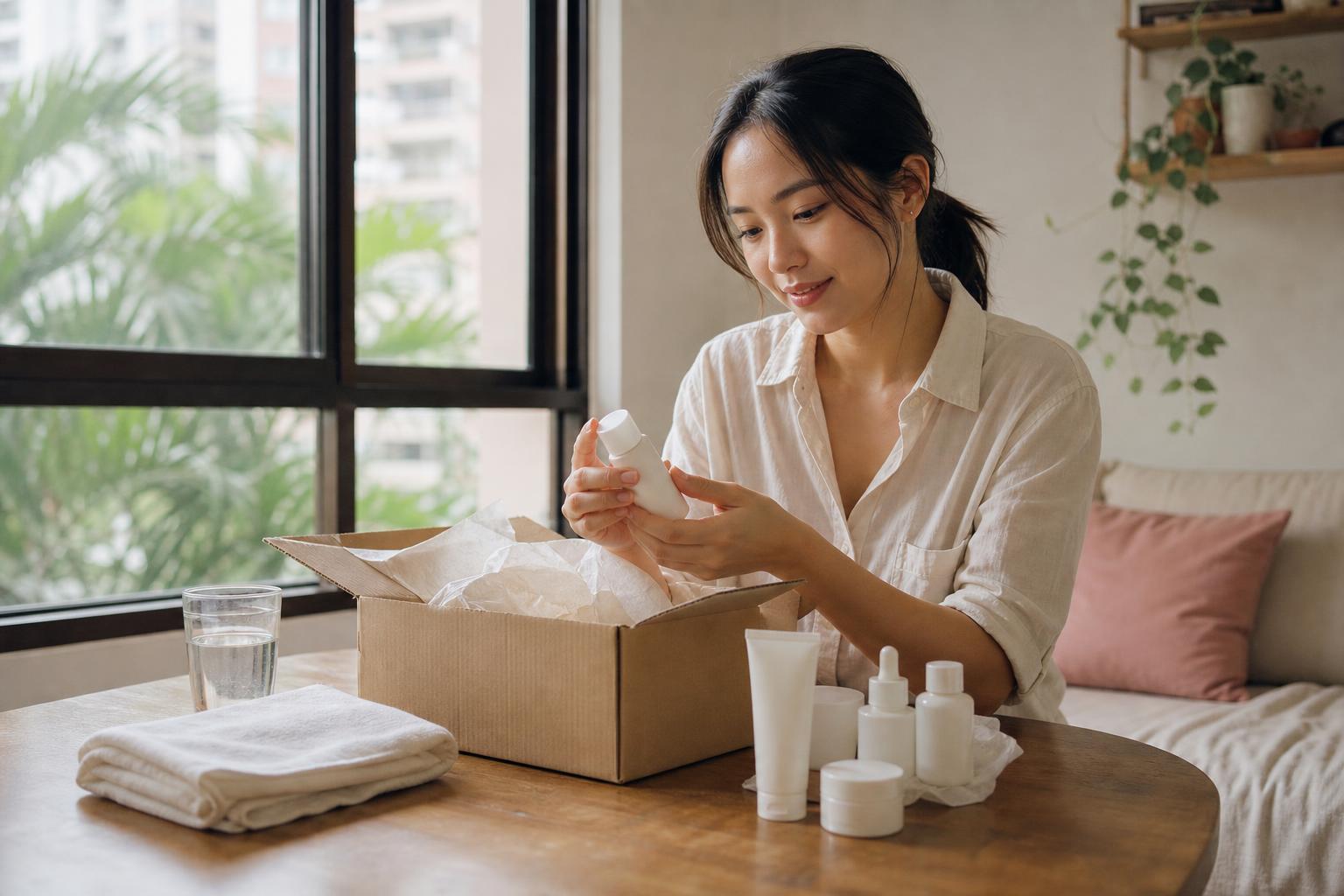
There is a specific kind of patience involved in an Olive Young Global order. You add a cleanser, a sunscreen, two sheet mask packs you don't need, then sit on the cart for a week deciding whether it's worth crossing the free shipping threshold. If you've shopped this way from Singapore for a few years, you have probably also learned which of your favourites turn up at Guardian or Watsons eventually, and which ones never do.
So the news that CJ Olive Young is bringing curated K-beauty into Sephora stores in the United States reads differently here than it does there. For you, it's a shift in who else gets to shop the way you already do, and what that does to stock, hype and prices on the brands you rely on.
What Olive Young does that a beauty hall usually doesn't
Olive Young's real product is sorting. A Korean drugstore floor is arranged by problem and by step: cleansing oils together, toners together, a wall of sunscreens where you can compare finish and SPF side by side. Rankings sit on the shelf edge, so you can see what people are actually repurchasing rather than what the brand paid to put at eye level.
That structure is why so many brands got big outside Korea without much marketing. A curated Olive Young space inside a Sephora carries some of that logic into a store built around prestige brands and testers, which is a different shopping rhythm entirely.
What gets chosen for that space is the part worth watching. Curation means a shortlist, and a shortlist means the mid-tier brands you found by scrolling the Korean site at midnight may not make the cut.
Singapore's advantage is time, not price
Here is the part Singapore shoppers underrate. You are close to the source. Olive Young Global ships here, Shopee and Lazada seller stores carry Korean stock, and the popular formulas often reach Guardian, Watsons and Sephora Singapore while American shoppers are still watching restock videos.
That means new Korean launches usually reach you months before they reach a US shelf, and you can compare a Korean brand's sunscreen against a Japanese or local one in the same trip, because both are stocked here. Shipping windows from Korea to Singapore are short enough that heat-sensitive products spend less time in transit than they would going to the US, and you can buy one bottle to test rather than committing to a bundle from a reseller.
What a bigger US market changes is demand. When a cleanser becomes a viral object in America, the Korean stock that would have gone to global orders competes with a retail partner that buys in volume. Expect restock gaps on the loudest products, not on the whole catalogue. The unglamorous ones stay available.
Wider distribution tends to flatten a range
When a Korean brand signs a big Western retail partner, it usually leads with two or three items: the sunscreen, the hero serum, maybe a cleansing balm. The rest of the range stays behind in Korea.
That's fine if you only wanted the hero. It's less fine if your routine depends on the second toner in the line, the fragrance-free version, or the 300ml refill size that only exists on the Korean site. If a product like that is holding your routine together, buy it where you already buy it, and don't assume a Sephora listing will replace it.
There's also a reformulation risk worth knowing about rather than worrying about. Brands sometimes adjust filters and labelling to meet a new market's rules, and sunscreen is the clearest case: Korean UV filters and the labelling around them don't map neatly onto US regulations. A tube bought in Korea and a tube bought in a US store can differ. If a sunscreen texture works for you in this humidity, check the ingredient list when you switch source.
Buy for humidity and aircon, not for the ranking
A Korean bestseller list is built around a climate with a real winter. Singapore has a wet heat all year, plus eight hours a day in office air conditioning that pulls water out of your skin while the walk to lunch coats it in sweat. That combination rewards different textures than a ranking does.
What tends to hold up here: gel or fluid moisturisers over heavy creams for daytime, with something richer at night if your skin feels tight after cleansing; sunscreens that dry down without tackiness, since anything that stays wet will slide with sweat by mid-morning; niacinamide for oil and post-blemish marks, hyaluronic acid or glycerin for water, ceramides when aircon leaves your cheeks rough. Simple hydrating toners work better than layered essence stacks if you find your skin sits damp for too long, and a second cleanse in the evening is worth it only if you wear sunscreen or makeup, which in Singapore means most days.
What I would skip: alcohol-forward astringents bought to control shine, and thick occlusive balms during the day. Both tend to backfire in this climate, one by leaving skin tight and reactive, the other by trapping sweat.
If you're not sure which product is doing what for you, one bottle at a time is the only reliable way to find out. You can track your routine with Roona and see how your skin responds over a few weeks rather than guessing after three days.
How to shop the moment sensibly
A retail expansion is a good excuse to audit your own habits instead of your cart.
- List what you have actually finished in the past year. Those are your keepers, and they're worth buying in the largest size available.
- Note which of those come from the Korean site only. Order those with a bit more lead time now, since attention drives restock delays.
- Try one new thing at a time, ideally a step you already use rather than an extra one.
- Check the sunscreen label whenever you change where you buy it.
- Give anything with an active four to six weeks before you decide, and stop earlier if your skin stings or flushes.
If a product sells out, wait. K-beauty restocks. The urgency around a limited drop is a merchandising decision, not information about your skin.
What this actually signals
Olive Young moving into Sephora tells you that Korean drugstore brands are now considered dependable enough to sit next to prestige lines in a major US chain. That's a distribution story, and distribution stories mostly affect availability and marketing volume. They don't change what glycerin does, or how your skin behaves in a 30 degree afternoon.
Your routine will keep working while the retail map redraws itself. The brands you like will get louder for a while, some will raise prices as they scale, and a few of the small ones you found early will get harder to buy. Keep a note of what's worth restocking before that happens.
If you'd like a calmer way to see what's actually earning a place in your routine, Roona is here whenever you want it. No rush.
Trend source: 아시아경제 (SG)
Keep reading
-
Sephora Afterpay Sale Singapore: What to Buy and Skip
Make smarter Sephora Afterpay Sale purchases in Singapore with a practical guide to useful skincare, makeup and haircare deals worth skipping. 27 August 2026 -
What derm-approved really means at Sephora in Singapore
A practical look at the brands worth your money at Sephora, Watsons and Guardian in Singapore, what derm-approved actually signals, and how to read a label fast. 26 August 2026 -

How K-Beauty Found Its Next Home in Mexico
Korean skincare is expanding fast in Mexico and Brazil. What that means for formulas, prices, shopping habits and the routines that actually suit local weather. 19 August 2026