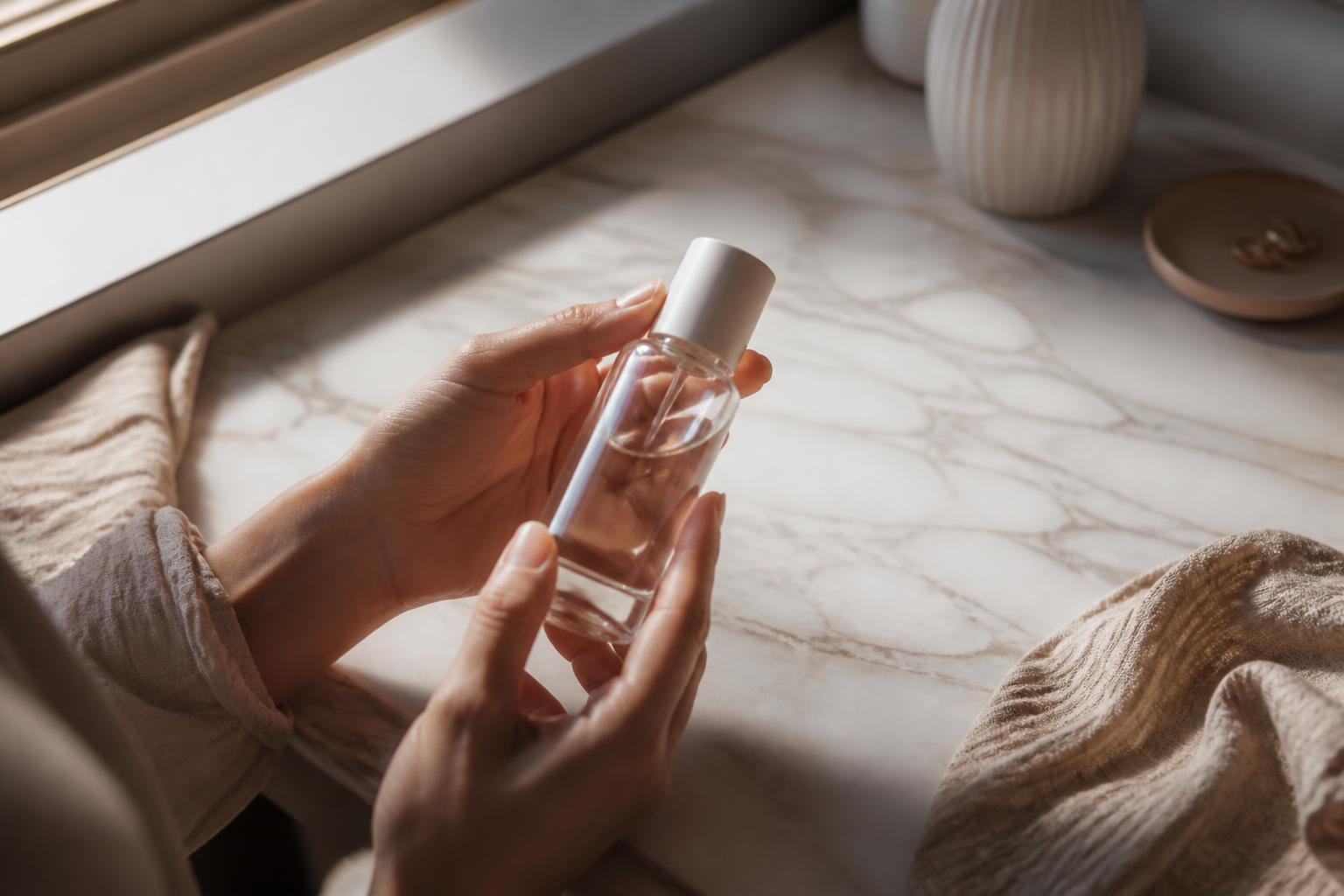
You open a new serum and the dropper feels different in your hand. Heavier. The glass is thick, slightly warm. The product itself moves slowly, almost like honey, and when it touches your skin it doesn't just absorb. It melts. You notice the weight of the bottle, the way the cap clicks shut, the faint scent that isn't quite fragrance but isn't neutral either. This is the texture of the newest wave of Korean skincare, and it's asking you to pay attention in a different way.
For years, K-beauty earned its reputation through innovation and efficacy. Snail mucin, centella, fermented ingredients, multi-step routines built around addressing specific concerns. The language was often clinical, the packaging efficient, the promise clear. But something has shifted. The launches arriving now from Seoul lean less on ingredient lists and more on how a product feels to use. Texture, weight, scent, ritual. The experience of applying skincare is becoming as central as what the product claims to do.
Skincare happens in a specific moment of your day, with your hands, your face, your attention. The artistry-led approach treats that moment as worth designing for.
The Shift from Clinical to Sensory
The ingredient-science era taught us to read labels like researchers. We learned to look for percentages, pH levels, molecular weights. We compared actives and checked for conflicts. That literacy mattered, and it still does. But it also created a kind of fatigue. Every product became a data point. Every routine a clinical protocol.
The brands leading this newer direction are pulling back from that intensity. They're designing products where the first thing you notice isn't the active ingredient but the way it feels. A cleansing balm that warms on contact. A toner with a viscosity that lets you pat it in slowly, deliberately. A cream that sits on the skin for a few seconds before sinking in, giving you time to massage it.
This shift shows up in packaging, too. Bottles with unexpected shapes. The design choices encourage you to linger, to treat the application as something worth your full attention rather than a checklist item between brushing your teeth and leaving the house.
What Ritual Actually Means Here
Ritual gets overused in beauty marketing, often as a stand-in for "multi-step" or "self-care." But in the context of artistry-led K-beauty, it points to something more specific. These products are built for repetition. They're meant to be used the same way, in the same order, with the same motions, day after day. The value comes not from novelty but from familiarity.
Think about the way you learn to make coffee. At first you measure everything, follow the steps carefully. Eventually your hands know the weight of the grounds, the timing of the pour. The process becomes automatic but not mindless. Artistry-led skincare products aim for that same quality.
That requires consistency in texture and performance. A cream that feels different every time you open it, or a serum whose viscosity changes with temperature, disrupts the ritual. These products prioritize stability in sensory experience because that's what allows the routine to settle into rhythm.
If you've ever found yourself reaching for the same product not because it's the most effective option in your cabinet but because you like the way it feels to use it, you already understand this. Artistry-led design just makes that preference the starting point instead of a happy accident.
How This Changes Routine-Building
When efficacy is the only metric, you build a routine by stacking actives. Vitamin C in the morning, retinoid at night, niacinamide somewhere in between. You troubleshoot by swapping one ingredient for another. The routine is a formula.
When texture and ritual matter, routine-building becomes more subjective. You might choose a hydrating toner not because it has the highest concentration of hyaluronic acid but because the viscosity works with the way you prefer to pat product into your skin. You might pick a cream based on how long it takes to absorb, because that timing fits the pace of your morning.
This doesn't mean ignoring ingredients. It means adding another axis to the decision. A product can be both effective and pleasant to use, or effective and slightly annoying, or beautifully textured but ultimately not right for your skin. All three variables matter.
If you're building or refining a routine right now, consider:
- Application method: Do you prefer patting, pressing, or smoothing? Some textures work better with certain motions.
- Absorption speed: How much time do you have between steps? A slowly absorbing product might feel luxurious at night and frustrating in the morning.
- Layering behavior: Does the product sit on top of what came before it, or does it blend in? Texture compatibility matters more when you're using multiple steps.
- Sensory preferences: Some people find thick creams comforting. Others feel suffocated by them. Neither response is wrong, and it's worth building around what feels good to you.
Track your routine with Roona to see which products you actually reach for consistently versus which ones sit unused, regardless of their ingredient profile.
The Limits of the Artistry Lens
This approach has real appeal, especially if you're tired of treating your bathroom counter like a lab bench. But it's worth naming what it doesn't solve.
A beautifully textured product that irritates your skin is still an irritant. A ritual that feels grounding but doesn't address the concern you're dealing with will eventually feel like a waste of time. Sensory design can make a routine more sustainable, but it can't replace efficacy.
The artistry angle also skews toward people who have the time and interest to slow down with their skincare. If you're managing a skin condition that requires targeted treatment, or if you're moving through your routine as quickly as possible because that's all the time you have, a heavy glass bottle and a cream that requires massage might not feel like an upgrade. That's fine. The artistry-led approach is one option, not the only valid one.
And there's a cost consideration. Products designed with this level of attention to texture and packaging often carry higher price tags. Thicker glass, custom applicators, complex formulations that prioritize feel as much as function all add up. If budget is a constraint, you can still find effective products. You just might not get the same sensory experience.
What to Look for if You're Curious
If you want to explore this direction, start with one product rather than overhauling your whole routine. Pick a step where you have a little time and attention to spare. Cleansing works well because it's something you do twice a day, and the sensory payoff is immediate. A cleansing balm or oil with good texture can shift the tone of the whole routine.
Look for products that describe their texture in detail. Brands leaning into the artistry approach tend to talk about how a product feels, not just what it does. Words like "melting," "cushiony," "silky," "sherbet-like" signal that texture was a priority in development.
Pay attention to packaging that slows you down slightly. A pump that dispenses slowly. A jar that requires two hands to open. These aren't inefficiencies. They're design choices meant to create a moment of transition between the rest of your day and the time you're spending on your skin.
And give it time. Ritual builds through repetition. A product that feels fussy the first time might feel comforting by the tenth. If after a few weeks it still doesn't fit the way you move through your routine, that's useful information. Not every texture works for every person, and there's no need to force it.
Building Around What Feels Sustainable
The through-line in all of this is sustainability, not in the environmental sense but in the behavioral one. A routine you'll actually do consistently matters more than a routine that looks perfect on paper. If artistry-led products make your routine feel less like a chore and more like something you want to do, that's worth considering.
The clinical approach taught us to ask, "Does this work?" The artistry approach adds, "Does this work for me, in my life, with my preferences and constraints?" Both questions matter. The best routine answers both.
If you're feeling ingredient fatigue or routinely skip steps because they feel tedious, texture and ritual might be the variable you've been missing. Roona helps you track what you're actually using, which makes it easier to spot patterns in what sticks and what doesn't.
Skincare doesn't have to be a creative practice, but it can be. The newest wave of Korean skincare is designing for people who want it to be. Whether that resonates with you depends on how you want to spend those few minutes at the sink, and what you're hoping to get from them beyond clearer skin.
Trend source: Trend Hunter (US)
Keep reading
-
Glowcations: Why Seoul Is the New Skincare Getaway
Seoul's skincare travel trend blends clinic appointments, K-beauty shopping, and routine planning into a more thoughtful alternative to the spa weekend. 5 September 2026 -
Martha Stewart's 84-Year-Old Skin and What 111SKIN Can Do
Martha Stewart's 111SKIN routine raises a useful question: what can luxury skincare do for different ages, and what is worth buying? 5 September 2026 -
The viral Brazilian Break skincare bag, edited for real travel
Build a lighter Brazilian Break skincare bag with practical travel sizes, heat-friendly ingredients, SPF, and a routine you can actually follow. 30 August 2026