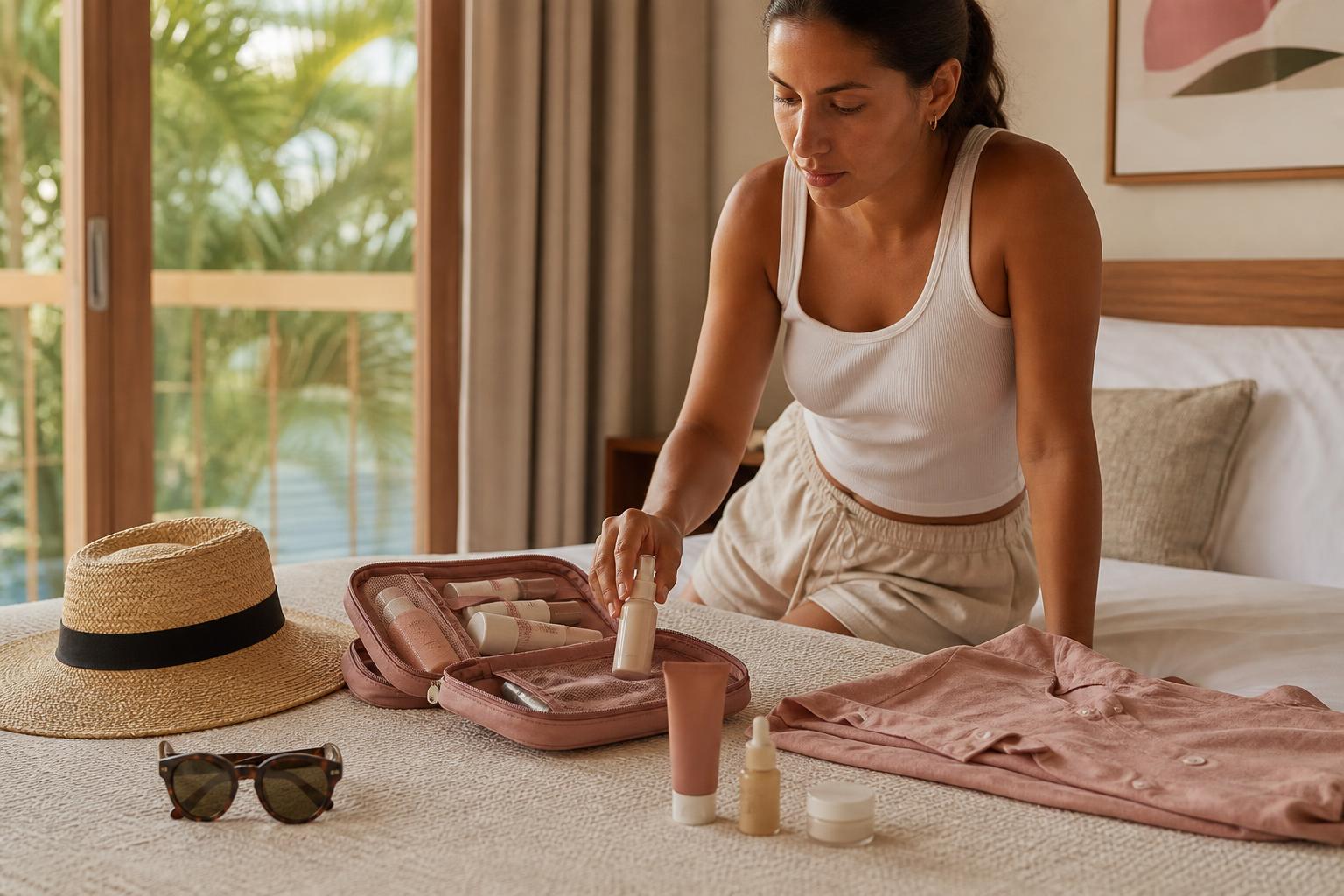
A TikTok packing video can make a small pouch look like a beauty counter. Then you get to the hotel, unzip it, and find three cleansers, two face mists, a full-size sunscreen, and products you never touch at home.
The Brazilian Break skincare bag works better when you treat it as a short routine, not a collection of tiny status objects. Heat, humidity, air conditioning, long flights, and unfamiliar water can all change what feels practical. Pack for those conditions, then leave room for the products that earn their place.
Start with the routine you already use
A travel bag should support your morning and evening steps. It should not become a test kitchen for new acids, retinoids, or heavily fragranced products.
Before packing, write down the products you use on an ordinary weekday:
- Cleanser or a gentle cleansing option
- Moisturizer, if your skin needs one
- Broad-spectrum sunscreen for the morning
- One treatment product you already know suits your routine
- Lip balm with SPF, if you use it
That list will look less impressive on camera than a pouch filled with ten minis. It will also give you a better chance of staying consistent during a trip.
Your destination matters. A beach stay in Florida, a humid city break in Rio de Janeiro, and a cool hotel with strong air conditioning create different packing needs. The common thread is restraint. Choose products that cover a clear step, and skip backups unless you have a specific reason to bring them.
What heat and humidity change
Heat can make a rich cream feel heavy, while humidity can make a routine with several layers feel uncomfortable. Sweat and sunscreen also mean you may want to cleanse more thoroughly at night, especially after a beach day or outdoor activity.
That does not mean you need a special summer collection. A few texture changes can do more than adding extra steps. Consider a lightweight lotion or gel moisturizer instead of a dense balm if your usual cream feels too occlusive in warm weather. Keep the product you know your skin tolerates, rather than buying a new gel formula at the airport.
A humid destination also gives face mists a lot of attention in social videos. A mist can feel refreshing, but it does not replace sunscreen or moisturizer. If the mist contains fragrance, alcohol, or active ingredients, read the label before using it repeatedly in strong sun. Water alone evaporates from the surface of the skin, so a mist is an optional comfort step, not the backbone of your bag.
Air conditioning creates a different problem. A long flight or cold hotel room can leave your usual routine feeling less comfortable. Pack your familiar moisturizer in a small, leak-resistant container rather than adding several new hydrating serums. Ingredients such as glycerin, hyaluronic acid, and panthenol appear in many moisturizers and serums, but the formula and your own tolerance matter more than a trending ingredient list.
The products worth packing
A cleanser that matches your sunscreen
Choose a cleanser you already use without trouble. If you wear water-resistant sunscreen or makeup, your evening routine may need a cleansing balm, oil cleanser, or first cleanse followed by a water-based cleanser. Pack both only if that is already your routine.
A cleansing wipe can help in a pinch after a flight, but it does not need to become your main cleanser. Wipes can leave behind surfactants, fragrance, or residue, and they encourage rubbing when you are tired. A small bottle of your usual cleanser is a more useful choice for most trips.
A sunscreen you will reapply
Broad-spectrum SPF 30 or higher is the product with the clearest place in a warm-weather travel bag. Pick a face sunscreen that fits your day, then bring enough for the length of the trip. A sunscreen that pills under makeup or feels unpleasant in heat often ends up unused, no matter how popular it is online.
Bring a separate body sunscreen if you will spend time outdoors. A face formula does not need to cover every exposed area, and a body sunscreen can make application easier. Reapply after swimming, sweating, or towel drying, and follow the product label for use.
A sunscreen stick can fit neatly into a small bag, but do not treat it as an automatic substitute for your main application. Use the format that lets you apply a thorough, even layer. A hat, sunglasses, shade, and clothing also reduce direct sun exposure during beach days and walking tours.
One treatment, not a shelf of them
Travel is a poor time to experiment with several exfoliating acids, retinol, vitamin C, and blemish treatments at once. Changes in climate, sleep, food, and water can make it harder to tell what your skin is reacting to.
If you already use one treatment comfortably, pack that product in its usual place. Azelaic acid, salicylic acid, retinoids, and exfoliating acids each have different instructions and tolerance considerations. Follow the label, avoid adding a second new active on the trip, and use sunscreen during the day.
A treatment can also be the easiest item to leave at home. If you will be outside for long hours, swimming, or moving between several climates, a short pause may make your routine easier to manage. Your bag does not need to prove that every step is essential.
A moisturizer with a job
Moisturizer is useful when it reduces tightness after cleansing, supports a comfortable routine in dry air conditioning, or gives you a familiar final step at night. Choose one formula rather than packing a day cream, night cream, sleeping mask, and emergency balm.
Look for ingredients you already know, such as glycerin, squalane, ceramides, or panthenol. A short ingredient list is not automatically better, and a long one is not automatically a problem. Your own history with the product matters more than a pouch-sized label.
How to pack liquids without overpacking
The Transportation Security Administration limits liquids, aerosols, gels, creams, and pastes in carry-on bags under its current 3-1-1 guidance. Check TSA guidance before you fly, especially if you are transferring between countries. Put travel-size containers in the required clear bag, and keep prescription products in their original packaging when that is practical.
Decant only products that you can identify. Unlabeled jars turn a simple routine into a guessing game, especially when cleanser, moisturizer, and sunscreen have similar textures. Use leak-resistant containers, write the product name on each one, and test the cap before placing the pouch in your luggage.
Solid formats can save space. A cleansing bar, solid shampoo, or sunscreen stick may avoid liquid-bag limits, but the format still has to work for your routine. Do not buy a solid version of a product you have never tried just because it packs neatly.
A useful packing test takes two minutes. Lay every skincare product on a towel, then remove anything that does not answer one of these questions: Will I use it in the morning? Will I use it at night? Will I need it for a specific outdoor activity? If the answer is no, it stays home.
What can stay home
The viral bag often carries products that overlap. A hydrating toner, essence, face mist, serum, sleeping mask, and sheet mask may all occupy the same general part of a routine. You can enjoy those steps, but a trip does not require every version at once.
Leave these behind unless they serve a clear, familiar purpose:
- New products bought for the trip
- Several exfoliants with similar uses
- Full-size bottles when a smaller container will cover the trip
- Duplicate moisturizers for slightly different textures
- Tools that need cleaning, charging, or careful storage
- Masks that require extra time you will not take
A facial roller or gua sha tool may be part of your personal ritual. Pack it if you use it and have room, not because a video made it look compulsory. Tools add weight and can collect residue when they travel loose in a pouch.
A simple Brazilian Break routine
Keep the morning short. Cleanse if you need to, apply moisturizer if your skin calls for it, then use broad-spectrum sunscreen. Add makeup or lip products after the sunscreen has set according to its label.
At night, remove makeup and sunscreen, cleanse, apply your one familiar treatment if you brought it, then moisturize. After a long beach day, rinse away salt, sand, and sunscreen before bed. If your face feels uncomfortable, resist the urge to scrub or add several actives. Give the routine fewer variables.
You can track your routine with Roona before you leave and note which products you actually use. A short record can show that your everyday cleanser and moisturizer did more work than the products you packed for an imagined version of the trip. Roona can also help you keep the routine visible when your normal morning and evening cues disappear.
Make the pouch fit the trip
For a weekend in a hot, humid place, a small cleanser, lightweight moisturizer, sunscreen, and one optional treatment may be enough. For a longer stay, add product only when the trip creates a real need. A destination with dry winter air may call for a richer moisturizer. A beach itinerary may call for more sunscreen and a body cleanser. A city trip with lots of walking may make a hat and comfortable lip balm more useful than another serum.
Social media has turned the travel pouch into a small performance. Your best bag can be less photogenic and more honest. Pack the products you know, protect your skin from the sun, and leave the unused weight at home.
If you are planning a Brazilian Break or another warm-weather trip, Roona can help you build a routine around the products you already own. Start with the smallest version that covers your real day, then adjust only when the destination gives you a reason.
Trend source: t.co (US)
Keep reading
-
Glowcations: Why Seoul Is the New Skincare Getaway
Seoul's skincare travel trend blends clinic appointments, K-beauty shopping, and routine planning into a more thoughtful alternative to the spa weekend. 5 September 2026 -
Martha Stewart's 84-Year-Old Skin and What 111SKIN Can Do
Martha Stewart's 111SKIN routine raises a useful question: what can luxury skincare do for different ages, and what is worth buying? 5 September 2026 -
Sephora Afterpay Sale Singapore: What to Buy and Skip
Make smarter Sephora Afterpay Sale purchases in Singapore with a practical guide to useful skincare, makeup and haircare deals worth skipping. 27 August 2026