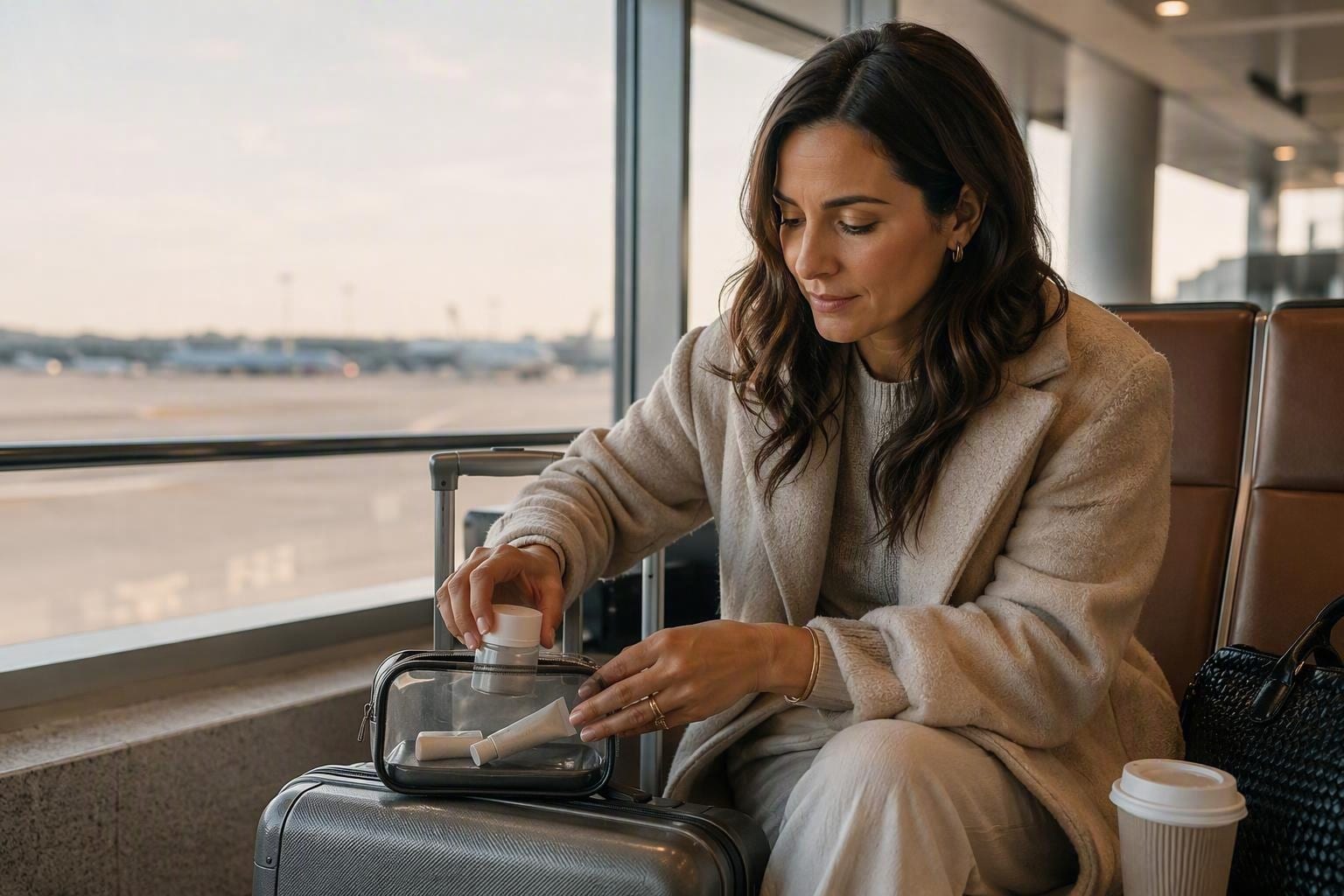
A face mist disappears quickly at 35,000 feet, while a small tube of moisturizer can become the most useful item in your personal bag. Airport retailers have noticed. London Luton Airport is the latest to sell curated skincare kits for passengers dealing with dry cabin air, a sign that in-flight skincare has moved beyond influencer packing videos and into travel retail.
The kits can be convenient, but a travel pouch with a high price does not automatically make a better routine. Cabin air, recycled airflow, a long cleansing gap, and a flight's timing all affect what your skin needs. The smartest kit contains fewer products than the display suggests.
What cabin air does to your skin
The air inside an aircraft usually has lower humidity than the indoor air many people experience on the ground. That dry environment can increase water loss from the outer layer of skin. You may notice tightness around the cheeks, flaky patches near the nose, or makeup that settles into dry areas during a long flight.
Cabin pressure is part of the travel experience, but pressure itself does not tell you which serum to buy. Dry air and steady airflow matter more for a simple preflight plan. Sitting near a vent can make that sensation more noticeable. Cleansing at an airport sink, applying a strong exfoliating acid, or drinking alcohol during the flight can also leave your usual routine feeling less comfortable.
A flight does not require a separate skincare identity. It calls for a routine that protects the skin surface, limits irritation, and fits inside a small bag.
The products worth buying in an airport kit
A useful kit starts with a moisturizer. Look for a face product that contains ingredients such as glycerin, hyaluronic acid, squalane, dimethicone, or ceramides. Glycerin and hyaluronic acid help attract water. Squalane and dimethicone help reduce water loss at the surface. Ceramides support the structure of the outer skin layer.
The formula matters more than the label cabin, flight, or travel. A familiar moisturizer in a 30 or 50 milliliter tube can do the job better than a themed set with several tiny products you have never used.
A gentle cleanser can help if you plan to remove makeup after landing or before an overnight flight. Choose a low-fragrance or fragrance-free formula if your skin reacts to scented products. You rarely need to wash your face repeatedly during the journey. Water alone will not remove sunscreen, makeup, or an oil-based product, so save the cleanser for a real cleansing step.
A lip balm with petrolatum, lanolin, or plant oils earns its space because lips lose moisture quickly in dry air. A small ointment can also cover a rough spot around the nose or mouth. Keep it separate from a pot product if you want to apply it without touching the rest of the formula.
Face mist is optional. A mist can wet the skin for a short time, but it does not replace moisturizer. If the water evaporates and you do not follow with a moisturizer, the benefit may be brief. A mist with a simple formula can feel pleasant during a long flight, yet it should be the first item to skip when space or money is tight.
A simple routine before, during, and after a flight
Timing helps more than adding five products. Build the routine around the part of travel when your skin has the most contact with dry air and makeup.
Before leaving home, use a gentle cleanser if you need one. Apply your usual moisturizer while the skin is still slightly damp. In the morning, finish with broad-spectrum SPF 30 or higher on exposed skin. Aircraft windows block some ultraviolet radiation, but a window seat still places you closer to daylight, and sunscreen remains part of a daytime routine when you travel to or from the airport.
During the flight, leave active treatments at home. Retinoids, exfoliating acids, benzoyl peroxide, and strong vitamin C formulas can irritate some people, especially when the skin already feels dry. A flight is a poor time to test a new product. Apply a thin layer of moisturizer when your skin feels tight, then add a little more to dry areas if needed.
After landing, cleanse when you reach your destination, especially if you wore makeup or reapplied sunscreen. Apply moisturizer again. If you arrive during the day, use SPF before going outdoors. If you land at night, skip the extra steps and let your normal evening routine do the work.
A compact flight routine can look like this:
- Before departure: moisturizer and daytime SPF.
- In the cabin: moisturizer for tight areas, plus lip balm.
- After arrival: gentle cleanser, moisturizer, and SPF if you are heading outside.
That is enough for most trips. Add a prescribed product only if it already belongs in your regular routine and you know how your skin responds to it.
How to judge an airport skincare kit
Airport retail makes convenience feel urgent. The kit sits beside travel adapters and neck pillows, and the small packaging suggests an easy solution. Pause before buying it at the gate.
Check the ingredient list first. A kit built around one moisturizer, one lip product, and a gentle cleanser has a clear use. A set filled with fragranced sprays, peel pads, masks, and several unfamiliar serums asks more from your skin and your attention.
Then check the size. The Transportation Security Administration allows liquids, aerosols, gels, creams, and pastes in containers of 3.4 ounces or 100 milliliters or less in carry-on luggage. They must fit within the required liquids bag. A solid cleansing bar or balm can take up less space, but inspect the packaging and storage instructions before packing it.
Finally, compare the cost with products you already know. Sephora, Ulta, and many drugstores sell travel-size versions of familiar cleansers and moisturizers. A kit is worth considering when it solves a real packing problem, uses ingredients your skin already accepts, and costs less than buying the same categories separately. A premium pouch and a destination-themed label do not change what the formula does.
What to leave out of your carry-on
Skip the full routine. A 10-step plan creates more chances for pilling under sunscreen, irritation, and forgotten bottles at security.
Leave out physical scrubs and strong peel pads for the flight. Dry cabin air can make a rough-feeling face tempting to exfoliate, but scrubbing removes surface cells without addressing the dry air around you. Pack a treatment only if you plan to use it on your normal schedule after you arrive.
Do not rely on sheet masks as a substitute for moisturizer. They can add water to the skin while they sit on the face, but the next step still matters. A moisturizer can reduce water loss after the mask comes off, while a mask alone may leave you reaching for another product at the gate.
Skip products with a scent you have never tried in a crowded cabin. Fragrance can bother some people, and a flight is a hard place to manage a reaction or rinse off a formula. The same applies to essential-oil-heavy blends and new active serums.
The best kit may be the one you already own
Airport skincare displays are responding to a real travel problem, but they also package a basic routine as a special event. A familiar moisturizer, lip balm, cleanser, and SPF often cover the useful parts of a flight kit.
Pack each product in a small pouch and note when you apply it. Track your routine with Roona before and after a trip so you can see which steps help you stay comfortable and which ones add clutter. A short note about the flight length, climate, and products used gives you something more useful than a rushed purchase at the departure gate.
The best airport buy is specific. If your lips crack on winter flights, buy a balm with an occlusive ingredient. If your cheeks feel tight after makeup removal, choose a gentle cleanser and a richer moisturizer. If you fly into a sunny destination, make room for SPF. A polished kit can wait.
Pack the products your skin already understands, keep the routine short, and let the airport shelf compete for your attention only when it offers a clear improvement over what is already in your bag.
Trend source: traveldailynews.com (US)
Keep reading
-

Skin Flooding in Winter: Does Layering Actually Work?
Skin flooding layers hyaluronic acid on damp skin for a dewy finish. Here's how the method works in dry winter air, and when a moisturizer does more. 2 August 2026 -
Glowcations: Why Seoul Is the New Skincare Getaway
Seoul's skincare travel trend blends clinic appointments, K-beauty shopping, and routine planning into a more thoughtful alternative to the spa weekend. 5 September 2026 -
Martha Stewart's 84-Year-Old Skin and What 111SKIN Can Do
Martha Stewart's 111SKIN routine raises a useful question: what can luxury skincare do for different ages, and what is worth buying? 5 September 2026