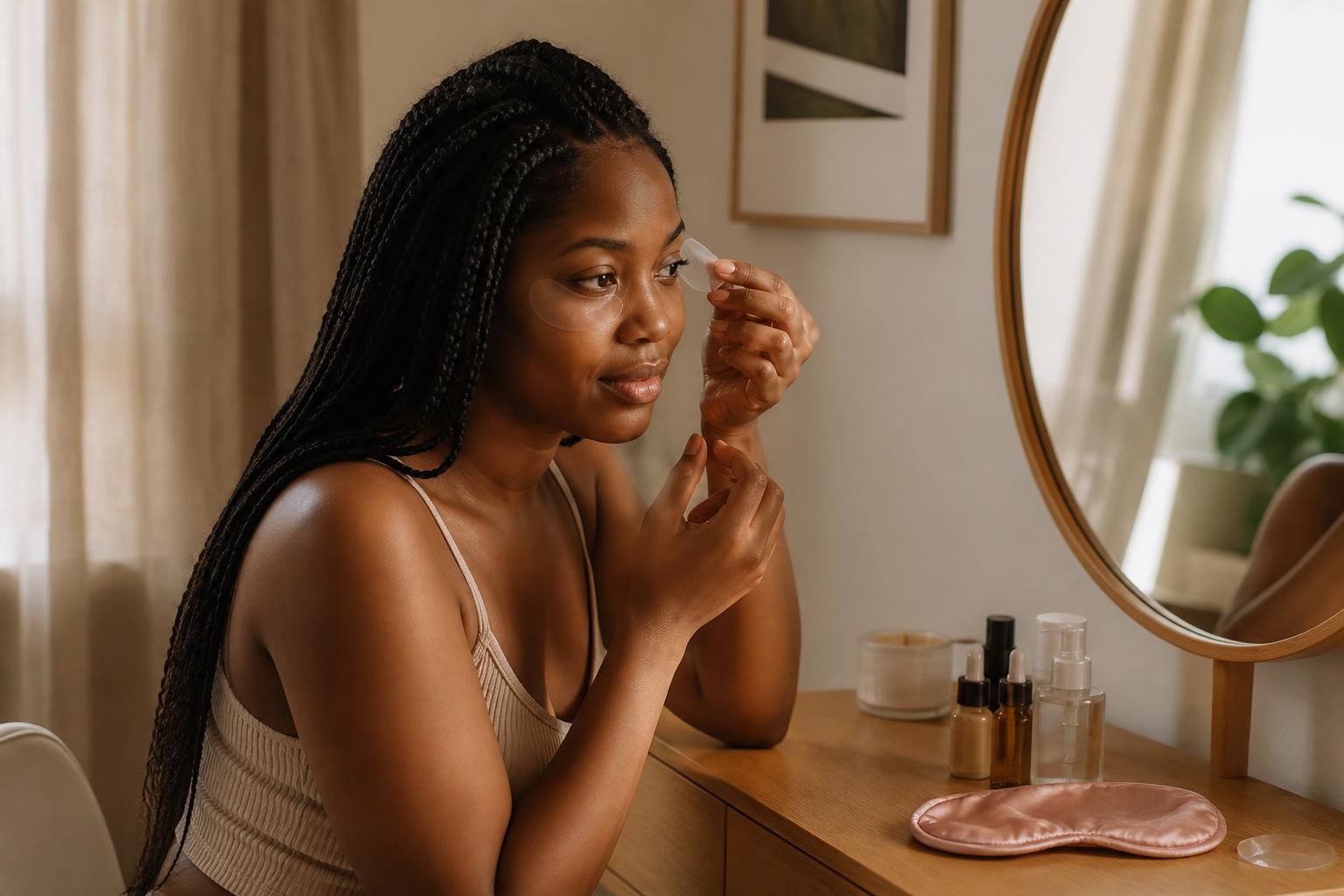
You wake up, sit at the edge of your bed, and begin removing things. Mouth tape first, then a chin strap, two silicone chest patches, a forehead smoothing band, an eye mask, and finally the heatless curler rods you forgot were pulling at your temples. By the time you reach for your phone, you have shed about six products before your feet have touched the floor.
This is the morning shed, and it has accumulated tens of millions of views on TikTok. The appeal is obvious: the videos are satisfying to watch, they position the night as productive, and they promise that sleep itself becomes a beauty treatment if you layer correctly. Some of what happens in those videos is genuinely useful. Some of it is theater. Knowing which is which saves you money, sleep quality, and the minor misery of waking up with adhesive marks on your face.
What overnight skincare actually does well
The case for nighttime application is real and well-founded. Skin loses moisture to the environment while you sleep, a process called transepidermal water loss, and certain ingredients applied before bed can slow that process meaningfully. Occlusives like petrolatum and squalane form a physical seal. Humectants like glycerin and hyaluronic acid draw water into the outer layers of skin. Ingredients such as retinol and peptides are typically recommended for evening use because they are either sensitive to UV exposure or simply work better when they are not competing with sunscreen.
A solid overnight routine, including a gentle cleanser, a hydrating serum, and a moisturizer or sleeping mask, has good support behind it. If that is where the morning shed stopped, there would be very little to question.
The items that hold up under scrutiny
A few of the accessories that appear in morning shed videos do have genuine rationale.
Silicone patches for the chest and décolletage. Silicone creates an occlusive microenvironment over skin, which helps with hydration and may reduce the appearance of fine lines that form from sleeping position. Dermatologists have long recommended silicone-based products for scar management, and the underlying mechanism is consistent. These are among the more defensible items in the shed.
Eye masks. A well-formulated hydrogel or fabric eye mask applied overnight can deliver humectants and soothing ingredients like niacinamide or caffeine to the thin skin under the eyes. This is the same logic as any hydrating serum, just shaped differently. Worth including if the under-eye area is a concern for you, though the effect is incremental rather than dramatic.
A quality sleep mask for the eyes. Blocking light supports melatonin production and deeper sleep, which has genuine downstream effects on how skin looks and feels. This one is less about topical chemistry and more about sleep architecture, but the benefit is real.
The items worth reconsidering
Other fixtures of the morning shed require more honest evaluation.
Mouth tape. Proponents argue that nasal breathing during sleep reduces mouth dryness and supports better oxygen intake. Some people with mild mouth-breathing habits report that it helps them sleep with more comfort. What mouth tape does not do is visibly reshape the jaw, tighten the chin, or change facial structure in any cosmetically meaningful way. If you are taping your mouth for the skin benefits shown in trend content, that connection is not well-supported. If you are doing it for sleep quality and find it comfortable, that is a different and more personal calculus.
Chin straps and forehead smoothing bands. These are positioned as passive face-sculpting tools, holding the face in a shape that will somehow persist after removal. Facial muscles and skin do not retain the position a strap held them in overnight. Compression can temporarily reduce the appearance of puffiness by shifting fluid, which looks impressive on camera immediately after removal but resolves within minutes. Wearing these tight enough to actually compress tissue meaningfully can also disrupt sleep and, in some cases, cause temporary pressure marks or discomfort.
Ten-step overnight layering in a specific order. Some morning shed creators apply six or more products in strict sequence, sometimes including incompatible actives. Layering an exfoliating acid under an occlusive sleeping mask, for example, can increase irritation rather than absorption. A shorter routine applied thoughtfully tends to outperform a complex one applied carelessly.
Why the trend keeps working anyway
Morning shed content is satisfying to watch for reasons that have nothing to do with efficacy. Removing things in sequence is inherently rewarding on camera. The ritual of it, preparing deliberately the night before and then unwrapping carefully in the morning, creates a sense of intention around self-care that feels good regardless of the biochemistry.
That psychological dimension is not nothing. Routines that feel worth doing are routines people actually keep. If the chin strap is the reason someone also consistently applies a peptide moisturizer and drinks enough water before bed, the chin strap is doing something, even if it is not doing the thing it claims to do.
The problem is when the theater displaces the substance. A reader who spends forty dollars on a forehead smoothing band and skips SPF in the morning because they feel covered has made a worse trade. Attention is finite, and so is a skincare budget.
Building a morning shed that earns its complexity
If you like the ritual, keep the parts that work and let go of the ones that are primarily content.
- An occlusive or sleeping mask over a well-layered hydrating routine is a strong foundation.
- Silicone patches on the chest or any area where you reliably sleep-crease are worth the investment.
- A good eye mask for blocking light costs very little and supports sleep quality.
- If you enjoy mouth tape and find it comfortable, that is a personal choice; just don't expect it to contour your jawline.
- Keep actives like retinol or exfoliating acids in a separate step, applied to clean skin before the occlusive layer, not buried under it.
If you want to understand what is actually happening to your skin overnight, track your routine with Roona over a few weeks. Patterns become visible when you log consistently: the mornings your skin looks and feels different, what you applied the night before, whether the elaborate version of your routine is moving the needle compared to a simpler one.
What the trend gets genuinely right
The morning shed, stripped of its more theatrical elements, points at something accurate: nighttime is productive time for skin, and treating it as such makes a real difference. Using those hours for hydration, barrier support, and targeted ingredients is a better investment than relying entirely on a morning routine.
The viral version just adds some layers that belong in a prop closet rather than on your face. You can keep the ritual and edit the cast.
If you're curious how your overnight routine is actually performing for your specific skin, Roona can help you log and review what's working without the noise of trend content telling you what to buy next.
Trend source: streamlinefeed.co.ke (US)
Keep reading
-
Glowcations: Why Seoul Is the New Skincare Getaway
Seoul's skincare travel trend blends clinic appointments, K-beauty shopping, and routine planning into a more thoughtful alternative to the spa weekend. 5 September 2026 -
Martha Stewart's 84-Year-Old Skin and What 111SKIN Can Do
Martha Stewart's 111SKIN routine raises a useful question: what can luxury skincare do for different ages, and what is worth buying? 5 September 2026 -
The viral Brazilian Break skincare bag, edited for real travel
Build a lighter Brazilian Break skincare bag with practical travel sizes, heat-friendly ingredients, SPF, and a routine you can actually follow. 30 August 2026