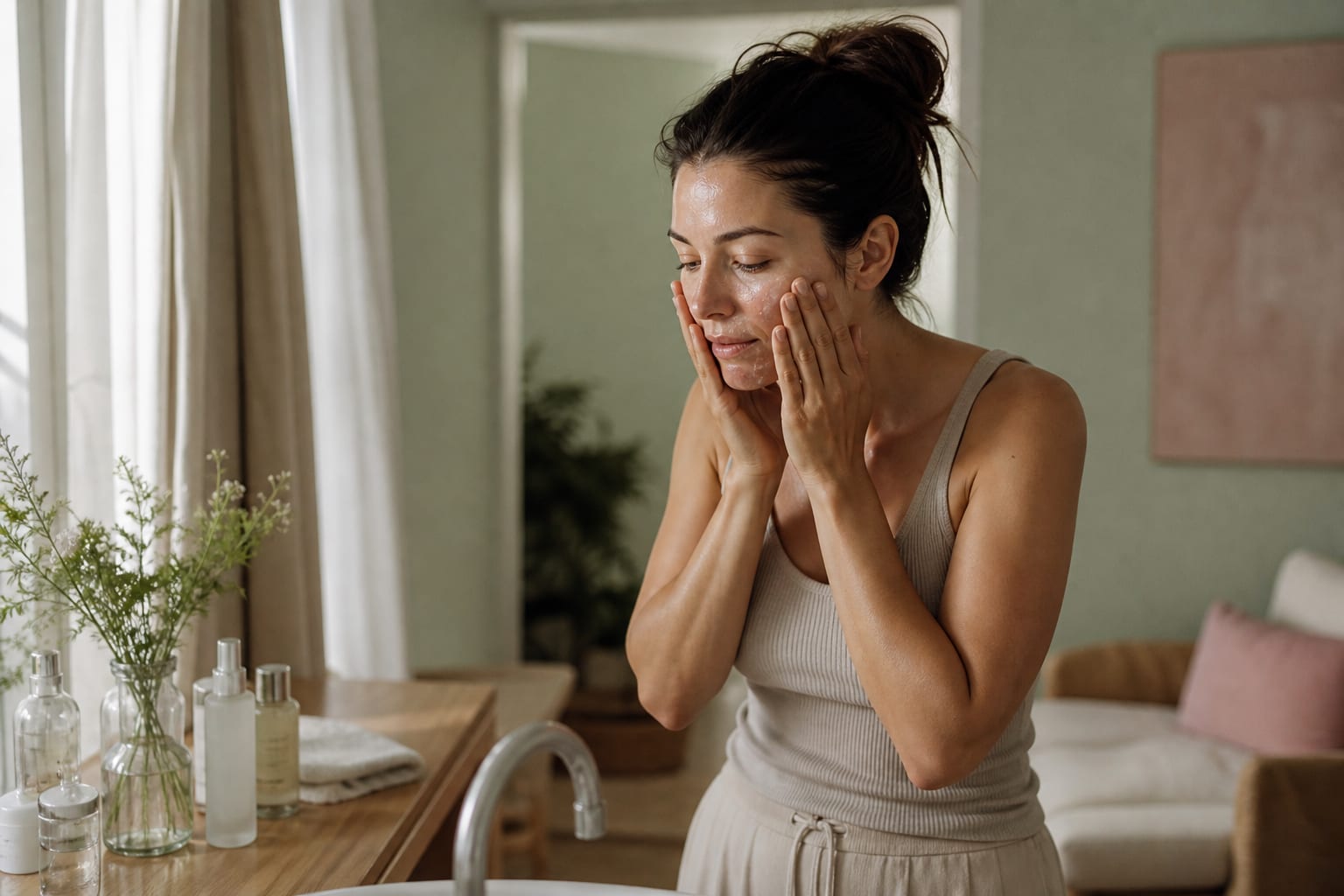
You pick up a green-tinted essence at a Korean beauty counter, turn the bottle around, and the first ingredient isn't water. It's artemisia leaf extract, sometimes listed at a high percentage, sometimes just called mugwort. If you've been reaching for centella every time your cheeks go pink after a shower, this is the ingredient quietly sitting next to it, and it's been on Korean shelves far longer than it's been on ours.
Mugwort is having a moment in the United States. Searches are climbing, Sephora and Ulta are stocking more K-beauty lines that lead with it, and brands like HANYUL have built entire ranges around artemisia. Worth understanding before you add another bottle to the shelf.
What mugwort actually is
Mugwort is the common name for plants in the Artemisia genus. The species most often used in Korean skincare is Artemisia princeps, sometimes called Korean mugwort or ssuk. It's not a novelty botanical invented for a product launch. It's been used in Korean cooking, in traditional bathing rituals, and in folk remedies for a very long time, which is part of why Korean formulators trust it and Korean consumers already recognize the smell.
And it does have a smell. Mugwort essences tend to be herbal, slightly bitter, a little like green tea steeped too long. Some people find it grounding. Some people find it off-putting. If you're sensitive to fragrance in general, note that this scent is coming from the plant material itself rather than added parfum, which some reactive skin types tolerate better and some don't.
Why it turns up in products for reactive skin
Artemisia extracts contain a mix of plant compounds, including flavonoids and other antioxidants. In skincare, mugwort is typically formulated as a soothing and antioxidant ingredient, aimed at skin that flushes easily, feels tight, or reacts to weather and product changes.
The practical read: mugwort belongs in the same mental category as centella asiatica, oat, and green tea. These are calming-leaning botanicals. They're not treatment actives. They won't clear congestion, fade dark marks, or resurface texture. What they can do is make a routine feel less irritating overall, which matters enormously if your skin has been reacting to a retinoid or an acid you're not ready to give up.
A few reasons it's finding an audience here. It's often formulated in low-irritation, low-fragrance-load bases, which suits winter-dry or post-treatment skin, and it pairs easily with a barrier routine of ceramides and glycerin without pilling or interacting. It shows up across product types, so you can slot it in wherever your routine has a gap. And it's a fresh option for people who have used centella for years and want to try something else.
Mugwort versus centella: how to choose
Centella asiatica, or cica, became the default calming ingredient in the United States around the time Korean sheet masks went mainstream, and it earned that spot. It's well studied, it's in everything from drugstore moisturizers to prescription-adjacent repair creams, and it's usually well tolerated.
Mugwort covers similar ground with a different plant profile. If centella has worked well for you, there's no reason to switch. If centella has done nothing noticeable, or if you're one of the people whose skin doesn't love it, mugwort is a reasonable next thing to try rather than jumping straight to something stronger.
One caution matters more than the rest. Mugwort is in the Asteraceae family, alongside ragweed, chamomile, daisies, and marigold. If you get seasonal allergies to ragweed pollen, or you've reacted to chamomile in a tea or a skincare product, patch test carefully and give it a full week on a small area before putting it on your whole face. This is not a reason to avoid it outright, but it's the one real flag on an otherwise gentle ingredient.
Where mugwort fits in a routine
Most mugwort products in the US market fall into a few formats, and they behave differently. Essences and toners are thin and watery, layered on after cleansing, and usually the highest-concentration format. Ampoules and serums are slightly thicker, sitting between essence and moisturizer. In cleansing balms and oils, mugwort is more scent and marketing than skincare benefit, since it rinses off. Sheet masks and wash-off masks are good for an occasional reset after a long flight or a windy weekend. Moisturizers and creams blend mugwort with ceramides or squalane, which is often the most practical single-product option.
A simple structure for reactive skin: gentle cleanser, mugwort essence patted in while skin is still damp, a moisturizer with ceramides, and sunscreen in the morning. That's it. Adding four mugwort products from the same line will not make your skin four times calmer, and it will make it much harder to identify what's actually helping.
If you use a retinoid or exfoliating acid, mugwort layers underneath or on alternate nights without fuss. There's no meaningful conflict, though wet-skin layering under a retinoid can increase its penetration, so if you're building tolerance, let the mugwort essence absorb fully first.
The realistic timeline
Calming ingredients don't announce themselves the way a good exfoliant does. There's no visible peel, no immediate glow. What you're looking for over two to four weeks is a reduction in the small annoyances: less stinging when you apply sunscreen, less redness after a hot shower, fewer days where your skin feels tight by mid-afternoon.
That kind of change is genuinely hard to notice in real time, which is why it helps to write things down. Note how your skin feels on day one, then check back in three weeks instead of trying to compare against a memory. You can track your routine with Roona and see whether the pattern actually shifted, or whether the humidity just changed.
One more variable worth naming: US indoor air. Forced-air heating from November through March pulls moisture out of everything, and a lot of what people call sensitivity in winter is dehydration wearing a costume. Mugwort essence on top of a humidifier and a richer night cream is a reasonable January plan. Mugwort essence alone in a bone-dry apartment is not.
Reading the label without getting fooled
The front of a bottle can say mugwort while the ingredient sits near the bottom of the list. Check where artemisia appears in the ingredient list: near the top means it's a real component, while last, after the preservatives, means it's largely decorative. Check whether the brand states a percentage, since Korean brands often do and a stated figure is more useful than a leaf on the packaging. Check whether added fragrance or essential oils are also present, because if you're buying mugwort for calming, extra fragrance works against the point. And check whether the rest of the formula supports your barrier: glycerin, panthenol, ceramides, and squalane are doing real work alongside the botanical.
Price is not a reliable signal here. Mugwort appears in affordable Korean brands sold on Amazon and in Korean grocery stores, and in prestige lines at Sephora. The formula matters more than the tier.
Who should probably skip it
If you have a confirmed ragweed or Asteraceae allergy that flares badly, this ingredient carries more risk for you than for most people. If your skin is actively broken, weeping, or in a flare your dermatologist is managing, adding a new botanical isn't the move. And if your routine currently has seven steps and you're not sure which one is causing the stinging, the answer is subtraction before addition.
For everyone else, mugwort is a low-drama ingredient that's earned its reputation in Korea over a long stretch of time and is now easy to find here. Trying one product, giving it a few weeks, and paying attention to how your skin actually feels is a perfectly good way to find out whether it belongs in your routine.
If you're testing it, keep a note of when you started and what else changed that week. Future you will be glad the record exists.
Trend source: Trend Hunter (US)
Keep reading
-
Sephora's Tween Skincare Lawsuit: What Parents Need to Know
A clear guide for Singapore parents on the Sephora youth skincare lawsuit, ingredient labels, age-appropriate routines, and safer shopping decisions. 8 October 2026 -
Glowcations: Why Seoul Is the New Skincare Getaway
Seoul's skincare travel trend blends clinic appointments, K-beauty shopping, and routine planning into a more thoughtful alternative to the spa weekend. 5 September 2026 -
Sephora Afterpay Sale Singapore: What to Buy and Skip
Make smarter Sephora Afterpay Sale purchases in Singapore with a practical guide to useful skincare, makeup and haircare deals worth skipping. 27 August 2026