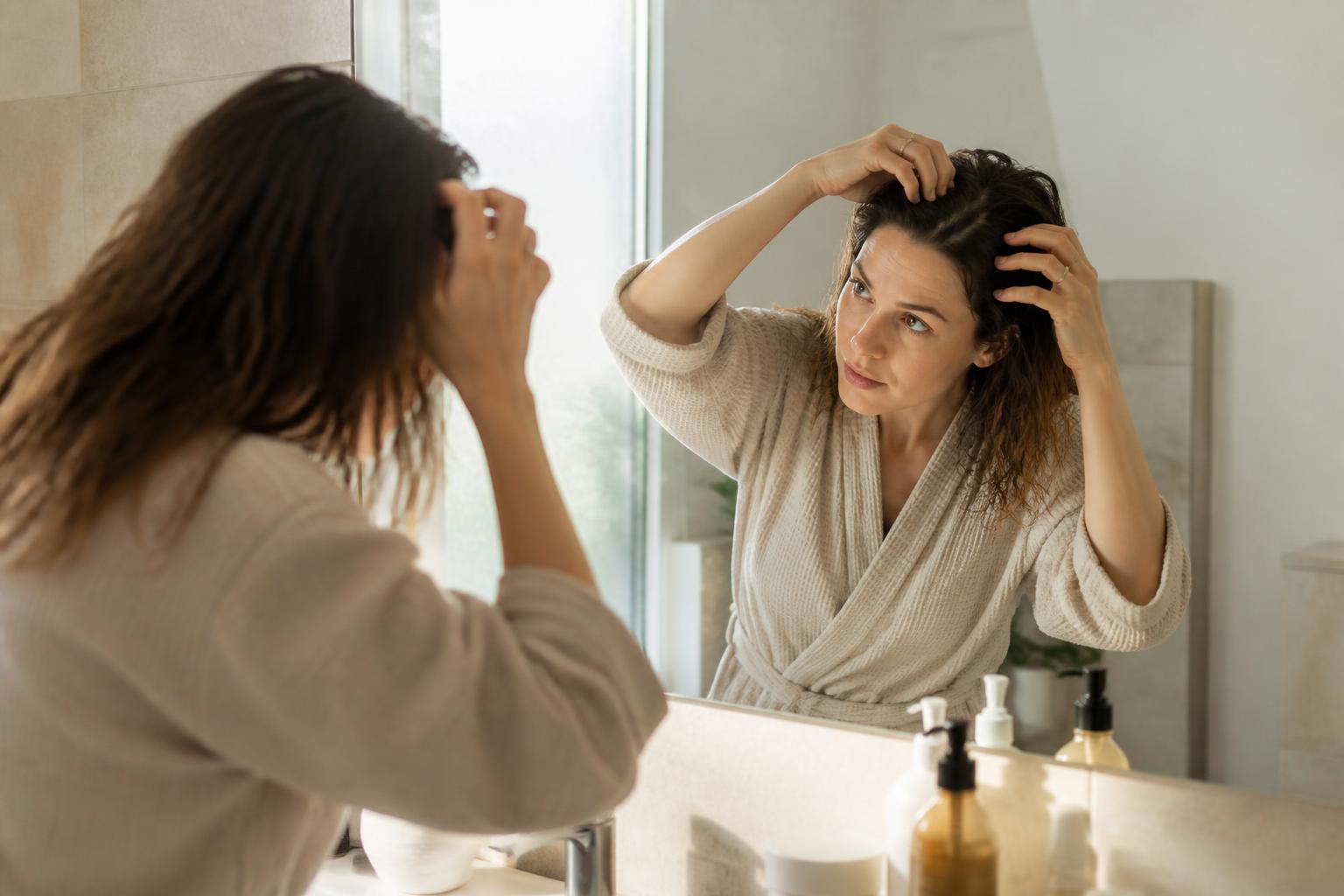
You notice it in the shower drain, or in the harsh overhead light of a fitting room, or in a photo someone took from above. More scalp than you remember. And the first instinct, for a lot of people who already own three serums and a good sunscreen, is to reach for skincare logic: exfoliate it, hydrate it, add an active.
That instinct is half right. The scalp is skin, with the same barrier structure, the same microbiome concerns, the same tendency to get irritated when you throw too much at it. It also has around a hundred thousand hair follicles embedded in it, which makes it a different environment with different rules. Knowing where the overlap ends saves you money and, more usefully, saves your scalp from a lot of unnecessary experimentation.
Your scalp is facial skin with a harder job
The scalp has a higher density of sebaceous glands than most of your face, which is why hair gets greasy at the roots while your cheeks stay dry in February. It also sits under a layer of hair that traps heat, sweat, product residue, and dry shampoo. If you left conditioner on your jawline for three days and then wore a wool hat over it, you would expect a reaction.
So the same things that upset facial skin upset scalp skin, usually louder:
- Sulfate-heavy cleansing every day, especially with hot water, which strips lipids the same way an aggressive foaming face wash does
- Fragrance and essential oils in leave-on products, a common source of contact irritation
- Occlusive styling products layered without a clarifying wash in between
- Physical friction from tight ponytails, headbands, and rough towel-drying
- Ultraviolet exposure along the part line, which most people never think about
That last one deserves more attention than it gets. The part in your hair is exposed skin. In summer, at the beach or on a long walk, it burns. Sunscreen sticks and powder SPF designed for the hairline exist for exactly this, and a wide-brim hat does the job without adding product to your hair.
The ingredients that genuinely cross over
Several things in your bathroom cabinet work on the scalp for the same reasons they work on your face. The delivery system changes, not the chemistry.
Salicylic acid, a beta hydroxy acid that dissolves in oil, clears the same kind of buildup in a follicle on your scalp as it does in a pore on your nose. It shows up in scalp scrubs and pre-shampoo treatments. Used once or twice a week, it handles flaking that comes from product residue rather than from a medical condition.
Niacinamide turns up in scalp serums for the same barrier-supporting reasons it turns up in moisturizers. Zinc pyrithione and ketoconazole, both found in anti-dandruff shampoos on any drugstore shelf, target the yeast associated with seborrheic dermatitis, which is the same organism involved when your nose and eyebrows get red and flaky in winter. If those two things happen at the same time on you, they are related.
Glycerin and other humectants soften a tight, dry scalp in the way they soften dry cheeks. And hyaluronic acid, which lives in most people's face routine already, shows up in lightweight scalp serums for people who want moisture without weighing the roots down.
What does not cross over cleanly: retinoids and high-strength AHAs. The scalp is sensitive, hard to rinse evenly, and easy to over-treat when you cannot see what you are doing. Leave those on your face.
Where skincare thinking stops
Here is the line worth drawing clearly. A scalp routine can support the environment a hair grows out of. It cannot change what happens inside the follicle.
The most common patterns of hair thinning in the United States are driven by genetics, hormones, age, thyroid function, iron levels, medication, and periods of significant physical or emotional stress. None of those respond to a serum you massage in at night. Telogen effluvium, the diffuse shedding that shows up two or three months after an illness, a surgery, a birth, or a crash diet, has a cause that lives upstream of your bathroom shelf. Androgenetic hair loss follows a hereditary pattern that topical scalp cosmetics are not designed to interrupt.
This is where a lot of money gets spent badly. Rosemary oil went through a long run on TikTok. Scalp massagers, red-light caps, peptide sprays, and "density" serums fill entire Sephora and Ulta shelves during awareness months. Some of these products are pleasant and some genuinely improve scalp comfort. Very few of them are the answer to a question about why hair is shedding.
The useful move, if you are seeing more shedding than usual for longer than a couple of months, is a board-certified dermatologist. They can look at the pattern, ask about medications and family history, and order bloodwork. That is not a discouraging outcome. It is the fastest route to knowing what you are actually dealing with, and it stops you from spending a year on the wrong shelf.
A scalp routine that is worth your time
The goal is a calm, clean, un-irritated surface. Not a fourteen-step protocol.
Wash often enough for your oil production. Daily is fine for oily scalps, and skipping washes to "train" your scalp does not reduce sebum output. If you are stretching washes, a gentler surfactant matters more than the frequency. Focus the shampoo on the scalp itself, with fingertips rather than nails, and let the rinse-off handle the lengths. Keep conditioner and heavy masks from mid-length down; most scalp buildup people blame on dandruff is unrinsed conditioner. Add one exfoliating or clarifying step weekly if you use dry shampoo, texture spray, or oils regularly. Treat flaking with a medicated shampoo left on for a few minutes before rinsing, rather than applied and immediately washed off. Protect the part line with a hat or a scalp-appropriate SPF when you are outside for a while. Loosen your ponytails and swap tight elastics for softer ties, especially at the hairline.
Give any change six to eight weeks before you judge it. Hair grows slowly and scalp skin turns over on its own schedule, so a week of a new shampoo tells you almost nothing. If you already track your routine with Roona, adding your scalp steps in alongside your face routine makes those slow timelines much easier to read, particularly when you are trying to work out whether a new product calmed things down or just coincided with the weather changing.
Winter, summer, and the seasonal swing
In January, forced-air heating pulls moisture out of indoor air across most of the country, and scalps get tight and flaky at the same time as shins and knuckles. That is a barrier problem, and it responds to gentler washing, cooler water, and a humectant. Central heating also encourages people to wash less and layer more dry shampoo, which quietly compounds the buildup.
In July, sweat, chlorine, saltwater, and sun exposure push things the other way. Rinsing your scalp after swimming matters more than any product you apply afterward. Chlorine sits on skin and continues to irritate.
The swing between those two states is normal, and your routine should move with it. A single fixed scalp regimen you never adjust will be wrong for half the year.
What to take from all this
Treat your scalp like skin: cleanse it properly, keep the barrier intact, protect it from sun, and do not pile on actives you cannot see the effect of. Expect real returns in comfort, flaking, and how your roots feel. Expect nothing from a topical when the cause of shedding sits in your hormones, your bloodwork, or a stressful stretch three months behind you, and take that question to a dermatologist instead.
If you want to see how your scalp responds across a full season rather than a week, logging what you use with Roona is a quiet way to keep the record. No pressure either way. Your scalp does not need another project, just a bit less guesswork.
Trend source: KOTA Territory News (US)
Keep reading
-
What Longevity Science in Skincare Really Delivers
Darkfin Labs' Ulta launch brings longevity skincare to a wider audience. Learn what the science can support, where claims stretch, and what to use. 8 October 2026 -

Sephora's Tween Skincare Lawsuit: What Parents Need to Know
A clear guide for Singapore parents on the Sephora youth skincare lawsuit, ingredient labels, age-appropriate routines, and safer shopping decisions. 8 October 2026 -

In-flight skincare kits: what to buy before you board
Airport skincare kits promise relief from dry cabin air. Learn which ingredients and travel-size products are worth packing before your flight. 27 September 2026