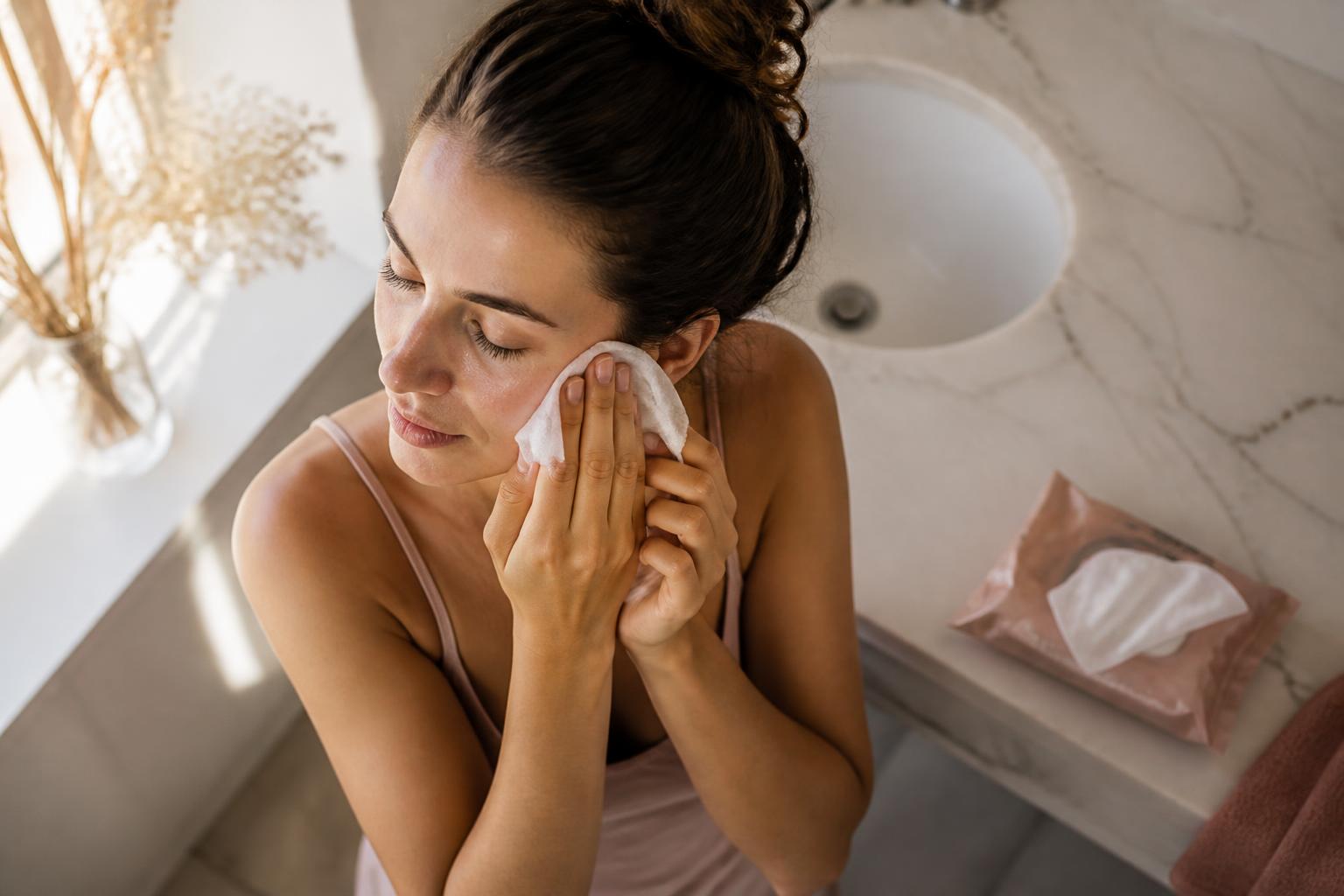
You're standing in front of the bathroom sink at 11 PM, too tired to think about double cleansing. The packet of wipes on the counter promises cleanser, toner, and serum in one swipe. You reach for it.
Serum-infused cleansing wipes have moved beyond the makeup-remover category. Brands now layer in niacinamide, hyaluronic acid, peptides, and botanical extracts, positioning these products as compressed routines rather than emergency shortcuts. The pitch is compelling: everything your skin needs, pre-portioned and travel-ready. But compression always involves tradeoffs, and understanding them helps you decide when a wipe works and when it doesn't.
What Serum-Infused Wipes Actually Contain
These newer hybrid wipes differ from traditional makeup removers in formulation density. Where a standard wipe focuses on surfactants to dissolve makeup and oil, serum-infused versions add treatment actives: humectants like glycerin and sodium hyaluronate, barrier-support ingredients like ceramides and cholesterol, and antioxidants like vitamin C or niacinamide.
The wipe itself matters. Some brands use biodegradable plant-fiber substrates that feel softer and break down faster than polyester blends. Others use embossed textures designed to physically lift debris without excessive rubbing. The serum component usually sits at a higher concentration than you'd find in a standard micellar water, closer to what you'd expect from a leave-on essence.
Because the product must cleanse and treat simultaneously, the formulation walks a line. It needs enough surfactant power to remove sunscreen and environmental grime, but not so much that it strips the skin before the treatment actives can do anything. Most use mild non-ionic or amphoteric surfactants, the same families you'd find in no-rinse cleansers and baby products.
Where Hybrid Wipes Genuinely Deliver
For certain situations and skin types, serum-infused wipes solve real problems.
They work well when you're genuinely too depleted to stand at a sink. Late flights, post-workout crashes, illness, or caring for a newborn: these are moments when a multi-step routine isn't happening. A wipe that cleanses and delivers some hydration or barrier support beats skipping skincare entirely.
They also suit minimalists who prefer fewer products and less decision-making.
Travel is the other obvious fit. TSA liquid limits make carrying a full routine annoying. A pack of wipes consolidates cleanser, toner, and essence into one flat, leak-proof format.
Track your routine with Roona to see which nights you actually complete your full regimen versus reaching for a shortcut. Patterns emerge quickly, and they'll tell you whether a hybrid wipe is filling an occasional gap or becoming your default because something about your main routine isn't working.
The Tradeoffs You're Making
Convenience compresses more than just steps. It also compresses contact time, customization, and control.
A serum applied to clean skin and left alone has minutes to penetrate. A serum delivered during cleansing has seconds before you move to the next area of your face, and it's competing with surfactants that may interfere with absorption. Some actives, like niacinamide, work well in leave-on formulas at low percentages. Others, like certain peptides or vitamin C derivatives, benefit from longer contact and a specific pH environment that a hybrid wipe can't guarantee.
You also lose the ability to adjust. On a dry winter morning in Chicago, you might want a richer moisturizer. On a humid August evening, something lighter. A wipe delivers the same thing every time. If your skin's needs shift with your cycle, the season, or your stress level, a pre-formulated wipe can't flex with you.
Physical cleansing method matters too. Wiping, even gently, involves friction. For skin that's sensitized, inflamed, or dealing with conditions like rosacea or eczema, that mechanical action can aggravate things in ways a soft washcloth or fingertip massage wouldn't. The convenience of a wipe assumes your skin tolerates being wiped, and not everyone's does.
Who This Works For (and Who Should Skip It)
Serum-infused wipes suit people with stable, resilient skin who value simplicity and don't have active treatment goals. If your skin feels balanced, you're maintaining rather than correcting, and your schedule or travel habits make a full routine impractical several nights a week, a good hybrid wipe can work.
They're less ideal if you're treating specific concerns. Acne, hyperpigmentation, fine lines, and barrier damage usually require targeted actives at specific concentrations, applied in a particular order, left on the skin long enough to work. A wipe can't replicate that.
Sensitive or reactive skin often does better with separate steps, because you can control each variable. If your skin reacts unpredictably, isolating the cleanser from the treatment products makes it easier to pinpoint what's helping and what's not.
Same for anyone using prescription retinoids, acids, or other actives that need a clean, dry base. A wipe leaves the skin damp and layered with product, which can increase irritation or dilute the efficacy of what you apply next.
How to Choose a Wipe That Actually Works
If you've decided a serum-infused wipe fits your needs, a few details separate the useful from the overhyped.
Check the active ingredients and their order in the list. If the serum actives appear after the eighth or ninth ingredient, you're mostly paying for packaging and marketing. Humectants like glycerin or hyaluronic acid should appear in the top five. If the product claims peptides or antioxidants, those should show up early too.
Look at the preservative system. Wipes live in warm bathrooms and get handled with less-than-sterile fingers. A solid preservative blend keeps the product safe without requiring alcohol levels that dry out your skin.
Consider the substrate. If sustainability matters to you, check whether the wipe material is biodegradable and whether the packaging is recyclable. Some brands use plant-based fibers that break down in compost. Others use synthetics that don't.
Test texture on your inner arm before using it on your face. If the wipe feels rough or leaves your skin red after a few swipes, it's too abrasive.
Building a Flexible Routine Around Wipes
Few people need the same routine every single night. A hybrid wipe works best as part of a flexible system, not a rigid replacement.
Keep your full routine for nights when you have the time and energy. Use the wipe on nights when you don't. That way, your skin still gets deeper cleansing and targeted treatment most of the week, and you're not sacrificing results for the sake of consistency that doesn't actually serve you.
Some people use wipes for travel and their full routine at home. Others use wipes for makeup removal and follow with a second, targeted step. There's no single right structure, just the one that fits your life without leaving your skin under-supported.
What Convenience Is Worth
Skincare marketing often frames convenience as laziness, as if the only virtuous routine is the longest one. That's not useful. A routine you'll actually do, even if it's shorter, beats an aspirational ten-step plan you skip four nights a week.
Serum-infused wipes compress steps, but they don't eliminate the need to think about your skin. They work when your needs are straightforward and your skin is stable. They don't work as well when you're troubleshooting a problem or treating an active concern.
The question isn't whether wipes are good or bad. It's whether the specific tradeoffs, compression of contact time and loss of customization, fit your skin and your life right now. If they do, a tool like Roona can help you track how your skin responds over time, so you'll know if the shortcut is actually working or just feeling easier.
Convenience that delivers is worth having. Convenience that only delivers marketing isn't.
Trend source: Trend Hunter (US)
Keep reading
-

Which Cooling Skincare Actually Calms Hot, Traveling Skin
Cooling mists, gel-creams and menthol sunscreens fill summer packing lists. Here is what genuinely soothes overheated skin on the road, and what only feels cold. 4 August 2026 -

Sephora's Tween Skincare Lawsuit: What Parents Need to Know
A clear guide for Singapore parents on the Sephora youth skincare lawsuit, ingredient labels, age-appropriate routines, and safer shopping decisions. 8 October 2026 -

In-flight skincare kits: what to buy before you board
Airport skincare kits promise relief from dry cabin air. Learn which ingredients and travel-size products are worth packing before your flight. 27 September 2026